In 2023, Chile officially incorporated the Selk'nam people into Indigenous Law 19.253, nearly a century after the waves of mass violence that swept across Tierra del Fuego. Behind this legal reform lies a long process of memory work, advocacy, and cultural self-affirmation led by Selk'nam families themselves.
Table of content
A people long absent from indigenous law in Chile
Since 1993, Law 19.253 has recognised a list of "indigenous peoples or ethnicities" in Chile and established CONADI, the National Corporation for Indigenous Development. For thirty years, this list included the Mapuche, Aymara, Rapa Nui, Atacameño, Quechua, Colla, Diaguita, northern Chango people, Kawésqar and Yagán — but not the Selk'nam.
Yet the memory of Chilean Tierra del Fuego remains deeply shaped by the Selk'nam presence: a people of nomadic hunters whose world stretched across steppe, forests and shores. In the accounts of explorers, missionaries and travellers such as Darwin, this people appears on the margins, already caught up in forced displacement or extermination. In law, they vanished entirely: Chile built an indigenous policy without ever mentioning the descendants of this people of the Great Island.
From parliamentary motion to law 21.606
The path to recognition runs through a bill, registered as Boletín 12.862-17 in the Chamber of Deputies. Carried by a cross-party group of parliamentarians, it proposed a targeted amendment: the explicit inclusion of the Selk'nam people in Article 1 of Law 19.253. The process involved years of patient work in committees, hearings and technical redrafting.
In August 2023, the Senate debated the bill. Senators and senators emphasised the historical debt owed by the State — its responsibility for declaring this people "extinct" while their descendants were living in Tierra del Fuego, in Porvenir and across other cities in the country. They approved a version introducing the Selk'nam into Article 1 and updating the law's terminology by speaking of "peoples" rather than merely "ethnicities".
On 4 September 2023, the Chamber of Deputies adopted the bill at third reading. According to the official record, 117 deputies voted in favour, with a single abstention, and the text was definitively approved. The Selk'nam became the eleventh indigenous people recognised under the Indigenous Law and the third people officially recognised in the Magallanes Region, alongside the Kawésqar and the Yagán.
A recognition described as a "historical debt"
Once passed, the law was promulgated and published in the Official Gazette on 19 October 2023, as Law 21.606. The new wording of Article 1 now lists, after the other peoples, the Selk'nam among "the main indigenous peoples or ethnicities of Chile". In the text, the State affirms that it values the existence of these peoples as "an essential part of the roots of the Chilean Nation, as well as their integrity and development, in accordance with their customs and values".
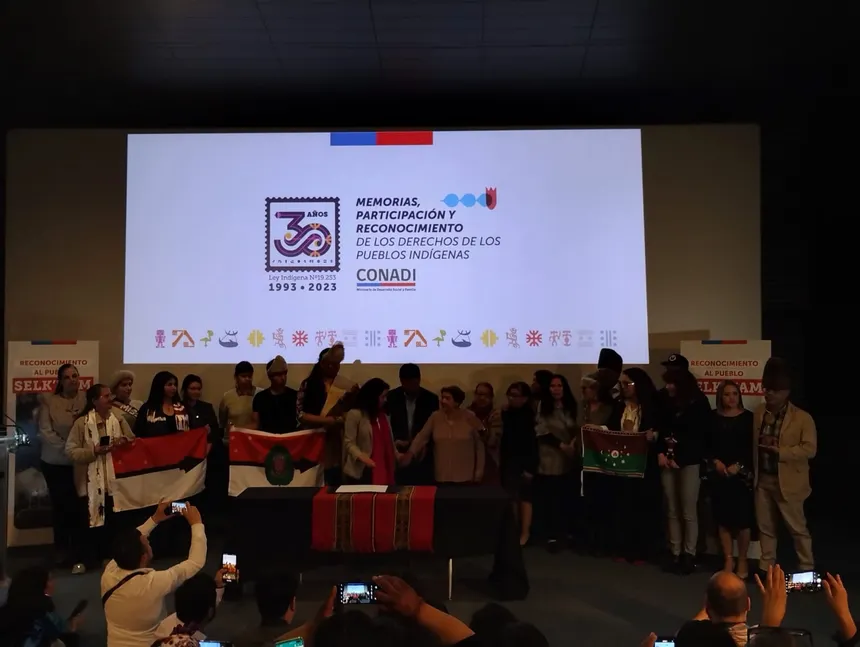
From the government's side, the Ministry of Social Development presented this reform as a form of reparation. Minister Javiera Toro spoke before Congress of a "historical debt" owed to the Selknam, recalling the State's responsibility in the policies that denied this people's existence and rendered their descendants invisible. On the occasion of the 30th anniversary of Law 19.253, CONADI chose to highlight this recognition as a "doubly historic" moment: the anniversary of the Indigenous Law, and the entry of the Selk'nam into the list of recognised peoples.
This institutional gesture is built on years of work by Selk'nam families. In Porvenir, the Covadonga Ona indigenous community — made up of Selk'nam descendants in Chilean territory — established the Corporación del Pueblo Selk'nam en Chile to represent the people on legal and political matters. Its mandate: defend collective rights, support legislative processes, and carry the voice of the families into spaces of negotiation with the State.
As early as 2019, the corporation submitted a bill specifically seeking to include the Selk'nam in Indigenous Law 19.253, with the support of indigenous legal scholars such as Ariel León Bacián. In parallel, other collectives — including the Telkacher community and the Fundación Hach Saye — were conducting fieldwork: language workshops, family research, and the reclaiming of narratives about the genocide and forced displacements.
A recent study, carried out in collaboration with the Fundación Hach Saye and the University of Chile, shows how these families mobilise law, art and ethnography to generate "new forms of struggle". Legal recognition becomes a lever for questioning access to ancestral territories, the restitution of indigenous place names in Tierra del Fuego, and the way Selk'nam history is taught in schools.
Selk'nam voices: between joy, caution and memory
In indigenous and allied media, the 2023 recognition is often described as "historic", but never as an endpoint. Servindi sums up the significance of the law by recalling that the Selk'nam become the eleventh indigenous people officially recognised by the Chilean State, after decades of official denial. This new visibility exists in dialogue with a history of violence: bounty hunts, forced displacements, confinement in missions and estancias, which marked the Great Island of Tierra del Fuego and the surrounding archipelago.
In an interview broadcast by El Mostrador and republished by Karukinka, young Selk'nam man Mauricio Astroza (Asamblea Telkacher) stresses the symbolic weight of this moment. For him, the legal recognition opens doors, but the challenge now is to defend a living culture, prevent the appropriation of Selk'nam symbols by institutions that do not work with the families themselves, and correct the notion — still present in some school textbooks — that the people has "disappeared".
At an official ceremony, the president of the Selk'nam Telkacher community, Ana María Muñoz, spoke of "mixed feelings": the joy of being recognised by the State and by Chile's other indigenous peoples, alongside the memory of generations who kept customs, stories and place names alive in a context of invisibilisation. The law has changed, but the work of reparation remains to be built, step by step, on the ground.
After recognition: what horizons?
Law 21.606 does more than add a name to a list. By updating the terminology of Law 19.253 towards "indigenous peoples", it brings Chilean law closer to the language of international instruments such as ILO Convention 169 and the United Nations Declaration on the Rights of Indigenous Peoples. This vocabulary opens the door to a more collective understanding of rights: political participation, territorial ties, protection of languages and knowledge.
Within this new framework, Selk'nam organisations are already advocating for concrete projects. In Tierra del Fuego, indigenous mapping projects for Selk'nam, Yagán and Haush territories explore how to rename landscapes using indigenous languages and historical pathways. A touring light artwork — Obra lumínica por el reconocimiento y la reparación del pueblo selknam — brings these questions of memory and justice to Porvenir and other southern cities, linking contemporary art, archives and family voices.
For the Selk'nam, the 2023 recognition thus marks a change of scale: from a people long described as "disappeared" in official discourse, to a living people, bearer of rights, knowledge and possible futures on their own land. For the Chilean State, it opens the obligation to build public policies in dialogue with these communities — not in their place.
Law 26.639, also know as Ley de Glaciares and enacted in 2010, established in Argentina the Minimum Budgets Regime for the Preservation of Glaciers and the Periglacial Environment, legally cementing the idea that glaciers are strategic freshwater reserves and public goods. Starting in 2025–2026, the national government pushed forward a project for a comprehensive modification of this norm (File 0161-PE-2025), which obtained half-sanction in the Senate and approval from the Chamber of Deputies, generating strong political and social conflict.
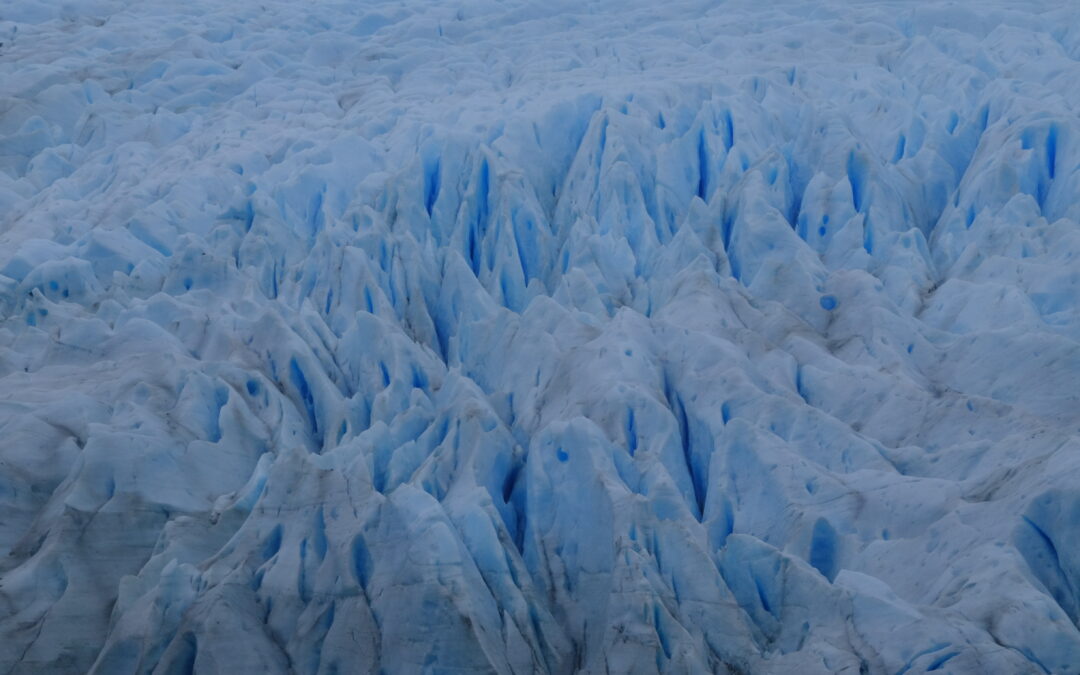
Karukinka Expedition (Fouque Glacier, 2025)
This article outlines the core content of the existing law, the main adopted modifications, the role of the provinces, as well as the social mobilizations and the interventions of Indigenous peoples—notably the Selk'nam jurist Antonela Guevara—who denounce the potential impacts of this reform (risks to water, ecosystems, and territorial rights).
Table of Contents
Law 26.639 (2010): content and scope
Purpose and principles
Article 1 of Law 26.639 sets the objective of establishing minimum budgets for the protection of glaciers and the periglacial environment, recognizing them as strategic reserves of water resources for human consumption, agriculture, watershed recharge, biodiversity protection, scientific research, and tourism. Glaciers are explicitly declared public goods.
The Library of Congress highlights that this law falls under the framework of Article 41 of the National Constitution (right to a healthy environment, national minimum budgets) and the General Environmental Law 25.675, which enshrines the principles of prevention, precaution, and non-regression.
Definitions: glacier and periglacial environment
Article 2 defines a glacier as any perennial ice mass, stable or slowly flowing, formed by the recrystallization of snow, regardless of its shape, dimension, or state of conservation; this includes rocky detrital materials and internal or superficial watercourses.
The periglacial environment is defined, in high mountains, as the area of frozen soils that acts as a water regulator, and in medium and low mountains, as the area with ice-saturated soils that plays the same regulatory role. These very broad definitions extend the scope of protection to forms of ice and frozen soils that go beyond just large visible glaciers.
National Glacier Inventory of Argentina (ING)
Articles 3 and 4 create the National Glacier Inventory, entrusted to the Argentine Institute of Nivology, Glaciology and Environmental Sciences (IANIGLA-CONICET), tasked with identifying all glaciers and periglacial landforms acting as water reserves, including their location, surface area, typology, and the variables necessary for their protection and monitoring.
The Legislative Dossier of the Library of Congress notes that Decree 207/2011 specified the organization of the ING by major glaciological regions (Desert, Central, Northern and Southern Patagonian Andes, Tierra del Fuego, and South Atlantic Islands) and mandated an update at least every five years.
Prohibited activities
Among its most important provisions, the law prohibits certain activities in glaciers and the periglacial environment, particularly:
mining and hydrocarbon exploration and exploitation;
the installation of industries;
the construction of works or infrastructure that could alter the natural dynamics of the ice or water quality (except for scientific research);
the storage or handling of contaminating or hazardous substances.
Any activity that may significantly affect these environments must be subject to a prior environmental impact assessment, in accordance with the General Environmental Law.
The 2025–2026 reform project: objectives and core modifications
Political context and stated objectives
In December 2025, the national executive branch submitted to the Senate Expediente 0161-PE-2025, aiming to amend Law 26.639, arguing the need to correct "interpretative flaws," lift legal uncertainties, and facilitate investments, particularly in mining. According to an analysis by Infobae, the executive presents the reform as a way to strengthen "environmental federalism" by giving provinces a greater role in managing their resources.
The project obtained 40 votes out of 72 in the Senate (40 in favor, 31 against, 1 abstention), with the support of part of the Radical Civic Union, Pro, and Peronist senators from mining provinces, before being passed to the Chamber of Deputies. In the lower house, the reform was ultimately approved by 137 votes in favor, 111 against, and 3 abstentions, and then sent to the executive for promulgation.
Redefinition of the inventory: "that act as reserves"
One of the most significant changes concerns Article 3 of the law, relating to the National Glacier Inventory. The new text, as described by the newspaper Ámbito, now stipulates that the ING will inventory glaciers and periglacial areas that "act as strategic reserves of water resources," instead of those that "fulfill the functions" of a reserve.
This substitution seems minor lexically, but the Library of Congress Dossier points out that it contributes to a re-definition of the extent of protected areas, by conditioning protection on the demonstration of an effective hydrological function rather than the mere presence of perennial ice. Provincial authorities are called upon to play a central role in this assessment.
Precautionary principle and possibility of subsequent exclusion
The reform introduces an Article 3 bis, which specifies, according to the text analyzed by Ámbito, that:
all glaciers and periglacial areas registered in the inventory will be considered part of the protected object until the competent authority verifies the non-existence of the hydrological functions defined in Article 1;
further on, it stipulates that when it is determined, based on technical-scientific studies, that a glacier or periglacial area "does not fulfill the intended functions," it may be considered excluded from the protected object.
We thus shift from a broad presumption of protection (any perennial ice mass in a periglacial environment) to a logic where the Inventory becomes a filtering tool, with the possibility of declassifying glacial units based on specific analyses.
Terminology: from "periglacial environment" to "periglacial landforms"
Several terminological modifications replace the expression "periglacial environment" with "periglacial landforms" (geoformas periglaciares) in the articles relating to the inventory and the competencies of authorities. For critics, this semantic substitution tends to fragment the object of protection (from the environment as a system to isolated landforms), which could reduce the territorial scope of the law.
Provincial competencies and the role of IANIGLA
The reform strengthens the mention of provincial authorities as "competent authorities," tasked with identifying, based on technical-scientific evidence, which glaciers and periglacial areas located in their territory fulfill certain hydrological functions. Where the previous version spoke of "sharing" information with IANIGLA, the new drafting replaces it with "notifying" the institute of the recorded ice bodies.
The Library of Congress Dossier indicates that these changes are at the heart of the debate on environmental non-regression: the fear is that provincial authorities subject to strong economic pressures might reclassify areas based on their hydrological functions, thereby reducing the extent of the protection regime.
Prohibited activities and environmental assessments
Article 6 (prohibited activities) is also amended. The new text maintains the catalog of prohibited activities (activities that "relevantly" alter the natural condition or hydrological functions, destruction, displacement, interference with ice advance, etc.), but now specifies that the severity of the alteration must be assessed "in the terms of Article 27 of the General Environmental Law 25.675," thus referring back to the environmental framework legislation.
The text confirms the obligation to subject any activity in glaciers and periglacial areas to environmental impact assessments, guaranteeing an instance of citizen participation in accordance with Articles 19 to 21 of the General Environmental Law. However, opponents argue that the reduction of the protected area makes these guarantees less effective.
Social mobilizations and territorial resistance
National mobilizations: "The Glacier Law is not to be touched"
The prospect of reforming Law 26.639 triggered a wave of mobilizations starting in late 2025, peaking during the debates in the Senate (February 2026) and the Chamber of Deputies (April 2026). Infobae and other Argentine media outlets reported massive demonstrations in Buenos Aires in front of the Congress, convened under the slogan "La Ley de Glaciares no se toca" ("The Glacier Law is not to be touched"), with a torchlight march and an artistic festival lasting until midnight.
Environmental organizations and citizen assemblies gathered for this day assert that the proposed changes endanger 7 million people and 36 watersheds deemed vital for various regions of the country, by opening the door to extractive activities in currently protected areas. Demonstrators insist that the reform "allows intervention in areas that the current law protects" and that it compromises access to water as a fundamental right.
Territorial mobilizations: the case of El Calafate
In El Calafate (Santa Cruz province), at the foot of the Perito Moreno glacier, mobilizations have followed one another: in February 2026, a new demonstration "in defense of the glaciers" was held simultaneously with the Senate vote, under the slogan "The Glacier Law is Not to Be Touched." According to local media Ahora Calafate, this was the fourth mobilization of the year 2026 in the city, with a march starting from Perito Moreno Square to the governor's official residence.
Organizers emphasize that "water and glaciers are non-negotiable" and announced further actions if the reform is approved, directly linking glacier protection to water security and the regional tourism development model.
Intervention of Indigenous peoples and the role of Antonela Guevara
A Selk'nam voice in the national debate
In this context, the jurist Antonela Guevara, lawyer for the Selk'nam community and a leading figure in the plurinational environmental campaign, became one of the most visible Indigenous voices in the debate over the Glacier Law. In an interview with Radio Provincia relayed by the media outlet Tarde pero Seguro, she stated that the modification of the law was decided "without social license and with a public hearing that was a farce," calling it "anti-regulatory" and "lacking real democracy."
Guevara denounces that more than 100,000 people who participated in the expanded consultation process were "silenced" and that the discussion is presented as purely technical, when "we are talking about water, about the present and future of life." She points out that the Selk'nam people have occupied the territory for over 10,000 years and asserts that the reform is intimately linked to commitments made by the government to the IMF and multinational corporations, rather than to the interest of citizens.
Glaciers, water, and prolonged genocide
In statements relayed on social media by Argentine Indigenous organizations, Antonela Guevara describes the modification of the law as a "new genocide" that threatens not only the glaciers but also the wetlands (humedales) and watersheds upon which Indigenous communities depend. She draws a connection between the current reform and local precedents, such as the salmon farming project in Tierra del Fuego, highlighting a similar logic of decisions made without genuine consultation and last-minute modifications.
Presenting herself as an "Indigenous woman and member of a people who have resisted for centuries," she insists that her participation in the national debate is not motivated by partisan affiliation, but by the defense of future generations, water, and ancestral territories.
Denounced potential impacts
Reduction of protected areas and risk of environmental regression
Analyses by the Library of Congress and Argentine economic media converge in stating that the reform "redefines the extent of protected spaces" by conditioning protection to glaciers and periglacial areas that demonstrate an effective hydrological function. This approach is perceived by many jurists and environmentalists as potentially regressive, contradicting the principle of non-regression enshrined in Argentine environmental doctrine.
Specifically, the fear is that small glaciers, buried ice zones, or frozen soils that play a water storage and regulation role—but are difficult to characterize—could be excluded from the specific regime, paving the way for mining, energy, or infrastructure projects.
Mining pressure and socio-environmental conflicts
Articles from La Nación and Infobae recall that one of the explicit goals of the reform is to "enable mining investments," particularly in copper and lithium, in areas hitherto considered protected by Law 26.639. The Andean provinces with a strong extractive focus (San Juan, Catamarca, Jujuy, Mendoza, etc.) occupy a central place in this debate, with some of their representatives having voted in favor of the reform in the Senate.
Mobilized organizations denounce that by weakening the perimeter of protected spaces, the reform risks intensifying existing socio-environmental conflicts surrounding large high-mountain mining projects, by reducing the legal instruments available to local communities and municipalities opposing them.
Threats to water and wetlands (humedales)
Actors in the "La Ley de Glaciares no se toca" campaign insist that the discussion is not just about visible ice, but the entire water cycle: aquifers, wetlands, catchments, and seasonal regulation. By limiting protection to glaciers and periglacial areas whose hydrological function is proven, the reform could, according to them, neglect complex hydrological systems whose contribution is not immediately quantifiable.
Antonela Guevara and other Indigenous spokespersons emphasize that these environments are intimately linked to the survival of their communities and their cosmologies, meaning that their alteration amounts to a new form of territorial and cultural violence.
CÁMARA DE DIPUTADOS DE LA NACIÓN ARGENTINA. Proyecto de modificación de la Ley 26.639: tratamiento parlamentario 2025–2026 [online]. Buenos Aires: HCDN, 2026 https://www.hcdn.gob.ar/
SENADO DE LA NACIÓN ARGENTINA. Dictamen y votación del proyecto de reforma de la Ley de Glaciares [online]. Buenos Aires: Senado de la Nación, 2026 https://www.senado.gob.ar/
TARDE PERO SEGURO. Antonela Guevara: “La modificación de la Ley de Glaciares se hizo sin licencia social” [online]. Argentina, April 8, 2026. https://tardeperoseguro.com.ar/?p=52515
ORIGINARIOS.AR. Antonela Guevara: intervenciones sobre la reforma de la Ley de Glaciares [online]. Argentine, s. d. https://originarios.ar/
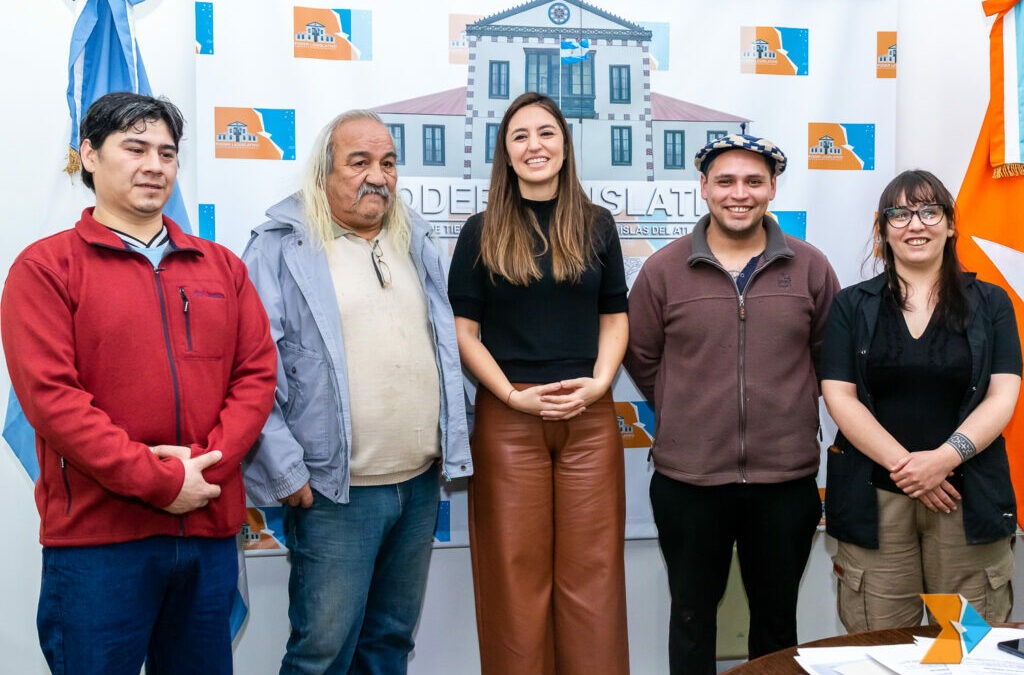
The president of the Commission 3 of the Provincial Parliament, Legislator Laura Colazo, conducted a meeting with the indigenous people communities. This is an initiative from the Green deputy to include them in the decision making within the Consultative Commission of the Indigenous Forests (CCIF). « We have the opportunity to acknowledge and make the autochthonous people of our Province visible who have lived and still live on these lands and offer a historical rectification, she declared. She also mentioned the necessity to expand the energetic matrix of the province to support a sustainable production process.
Source: https://www.radiouniversidad.com.ar/2024/08/26/dictamen-para-que-pueblos-originarios-participen-en-el-consejo-consultivo-provincial-de-bosques-nativos/ Translated from Spanish into French by the Karukinka association.
Río Grande. Last Thursday, Legislator María Laura Colazo (Green Party) attended a new meeting of the Natural Resources Commission n°3, which she presided. This was the occasion to discuss her initiative dedicated to “The 109/24 Case” with the aim of promoting the permanent integration of the representatives of the autochthonous people to the Consultative Commission of the Indigenous Forests (CCIF).
To this motive, the Parliamentary appreciated the attendance of the members of the communities: Rafaela Ishton and Paiakoala. “We have the opportunity to acknowledge and make the autochthonous people of our province visible who have lived and still live on these lands, and to offer a historical rectification”, declared Colazo.
The Parliamentary also underlined the utmost importance of the Selk’nam and Yagán people’s voices being part of the CCIF and that they have their place in this consultative body. “This is why we invited them, we wanted to have their support.”
She also added that this way they are “integrated” into the territorial discussion and planning processes. The Selk’nam people is the only autochthonous people who own their community propriety title”, she added.
It’s worth noting that the initiative includes amendments to provincial law n°869. In Article 14 of the aforementioned standard, the paragraph “q” is added, which specifies the integration of a representative for each indigenous community from the province with a legal status registered on national level.
Eleonora Anderson Varela, herself, from Rafaela Ishton’s community was thankful for this space: « We are delighted to have a place at the CCIF, this is a historical event for us. The community owns approximately 36000 hectares of which 80% are made of forests”, she declared.
Another member of the community, Alexis González Palma, told them “It is very important for us because they are giving us back our dignity and the possibility to tackle issues which affect us as autochthonous people of these lands”, he declared.
It’s worth noting that Tarcisio Vargas and Damián Nenes Vargas, from the Yagán people, also attended the Commission meeting as representatives of the Paiakoala community.
« Today, the autochthonous people are beginning to be respected. Taking care of our forests is good not only for the communities but also for the totality of the population. We risk losing the canelo and need to take care of it together”, declared Vargas, a Yagán referent.
Legislatofs Raúl Von Der Ensuren and Lechman (SF), Juan Carlos Pino (PJ), Federico Greve and Federico Sciurano (FORJA), as well as Legislatir Gisela Dos Santos (SF) were present.
Two million dollars for the Native Forests
It’s worth noting that Legislator María Laura Colazo attended the second annual meeting of the Consultative Commission of the Indigenous Forests of which she is a member, and which was held at Tolhuin Tourism Secretary beginning of August.
On that occasion, the working paths which will be followed were analysed, after it was learnt that the “Green fund for the climate» programme, which will be run through United Nations Organisation for food and agriculture (FAO), and rising from an initiative led by the national government and the province and called Reduction of the Emissions related to the Deforestation and Degradation of the forests (REDD).
The programme comes to the Land of Fire with a component which will be dedicated to the forest conservation work with the autochthonous communities, among which the global community Plan with Rafaela Ishton’s Selk’nam community and also at the productive development of the forestry bay of Tolhuin; the other component will also be used for the prevention of wood fire at the interface of Ushuaia. It’s worth noting that, according to the programme of fire prevention at the forest-urban area interface, we mean by fire a “fire which grows in the transition areas between the urban, rural or forestry areas where the structures of the buildings are mingled with the plants».
Approximately two million dollars will be allocated to the Land of Fire province “and the project in general, as mentioned by Engineer Francisco Jofré who is FAO’s representative which is in the province, is approximately 85 million dollars for the totality of the country in this programme called RedMás, a specific programme also related to the climatic change.
Members of the Forest National Board of Management and the FAO for the Payments at Results project attended the meeting, as well as managers of the provincial government and representatives of the institutions forming the CCIF.
It’s worth noting that the United Nations Organisation for the food and agriculture better known as FAO and a specialised agency of UNO leading international activities which aims at eradicating hunger.
The organisation is conducting several projects implemented all around the country. It plays a fundamental role in striving towards food safety, family farming reinforcement, transformation of food-processing systems and sustainable development.
“A lot of families live off the forestry sector”
During a talk with “La Mañana de Tecno”, broadcast on Radio Universidad 93,5 MHz, the Green Parliamentary reminded that the forestry consultative commission “is taking place under the 869 provincial law and is a environment composed of various actors” who are related to everything concerning the use of the whole forestry sector, what is active in our province. So, as a representative of the legislative Assembly, I have to be part of this space.”
Laura Colazo explained that « the members of FAO, an international organisation under the United Nations, benefit from specific financing programmes used to manage several projects in our country. And in this project which is very important and in the making in 23 provinces : we are working on those 3 issues in our province, which are the ones we talked about within the commission in order to grant approval to all the members to make progress in this area, while being able to follow through the community integration plans that the Forestry General Board of Directors works very well with the Selk’nam persons who have set up their authorities very recently, who have held elections. And the truth is that they have very interesting projects to be accomplished in our province, particularly in their community propriety, which represents 35 000 hectares owned in the Tolhuín region. And it is very important to achieve sustainable use, and the truth is that we think it is also important to assist them because it requires means to fulfil these projects.”
« For us, it’s very interesting to provide some assistance, everything needs to be done step by step. The technical advice mission will be carried out by means of organisations such as CIEFAP (Andine centre for the forestry research and vulgarisation of Patagonia), an organisation which has also been working in our province for many years and will provide all the technical advice, so it also seems important to do this. When I say that Tolhuin’s mayor (Daniel Harrington) is present in the area, it’s because it comes down to stimulate the productive development of this sector so that it keeps on generating work sources such as in Tolhuin today.
With regard to this, Legislator Laura Colazo noticed that “a lot of the families live off work in the forestry sector and it seems important to add on value, to be able to create training, to be able to use all these resources in a sustainable way and all the way through the production line, not only in raw wood but also in the use of forestry residues.
She understood that “there is a great opportunity to create more productive companies, to generate more work while taking care of the environment, because we are talking here of forestry residues which, in some cases are burnt and could generate a transformable product, raw material” then able to generate new products which “ can be part of the circular economy paradigm, by salvaging them and reintroducing them into the productive sector».
« Productive matrix and energetic matrix go hand in hand»
The Green Parliamentary understood that “we need to concentrate on the economy laid out by the forestry sector; It is not about generating a product in a linear way where the waste goes to the kip, but it’s rather about considering this waste as a resource and send it back as raw material so that new competitive products are generated into the market sector and creating work».
When asked about the energetic deficit held by Tolhuin to support an industrial process, she recalled that « by the end of 2022, we voted to grant the province the right to access a credit authorized the ACD, the Andine Confederation of Development, and by means of other funds that the province may obtain. Already in 2002, we noticed the necessity to invest in the totality of energetic matrix expansion of the Land of Fire. A few days ago, we learnt that the national government’s approval was under way, to set up credits and invest in equipment. I think this is fundamental for the development and particularly to think about the energetic transition that our province must implement. Today, we are providing gas supply. Gas is a transitional fuel. And all the resources generated by licence fees, as this province is one of first to produced gas from Argentina, these resources generated from the licence fees can be used to develop a new energetic matrix largely fed by renewable energies. And this financing project, which we approved in 2022 at the Legislature, is now going forward with the Nation’s approval and demonstrates all this a little.
“It’s a core issue: if we want to talk about expanding the productive matrix, it must go hand in hand with expanding the province energetic matrix”, she finally declared.
On the occasion of the Green Shift Festival, held from 5th to 7th June in Monaco, Jorge Quilaqueo, a Mapuche Chaman, exchanged with Sabah Rahmani, an anthropologist journalist, and Hélène Collongues, anthropologist specialising in the Jivaro people.
On the stage of the Green Shift Festival, from left to right, Jorge Quilaqueo, Sabah Rahmani, Hélène Collongues and Sébastien Uscher (the mediator). Credited by Philippe Fitte / FPA2
Jorge Quilaqueo is a Mapuche Chaman. This autochthonous people from Chile and Argentina once occupied a large part of the territory around the Andes Cordillera, until the arrival of the Spanish, from the Pacific Ocean to the Atlantic Ocean. Jorge Quilaqueo defends the rights of his people, dispossessed of a large part of their lands and wiped out gradually through the ages – there would be less than one million Mapuches today.
He is working at inciting all the people to reconnect to the living.
When stopping in Europe, he opened the 2024 Green Shift Festival of Monaco on 5th June with a water ceremony. This event was dedicated to new utopias of a more sustainable world and was the opportunity to talk about « the ecology of the emotional rather than the rational », as explained by Olivier Wenden, vice-president of the Prince Albert II of Monaco Foundation, who’s organising the festival, and of which WE DEMAIN is a collaborator.
The Assembly has approved a bill to add the Selk'nam people among the list of Indigenous Ethnic Groups recognized by the State.
Before it moved to the Executive for enactment into law, a bill was still waiting on a vote (bulletin 12862) to officially integrate the Selk’nam people to the Indigenous Ethnies recognized by the State.
This was made possible thanks to the Chamber Assembly, who approvel the modifications that were asked by Senate. The requested amendments were mainly about formality.
For the first review, the Chamber had drafted a text that specified the inclusion of the Selk’nam people into the norm of law 19.253 about Protection, Promotion and Development of Indigenous People. The Senate chose to refer to this norm and re-write the bill to include the Selk’nam people.
On this topic, the official bill now states:
“The State recognizes the following as main people or Indigenous ethnies of Chile: Mapuches, Aimara, Rapa Nui or Pascuense, Atacameño, Quechua, Colla, Diaguita, North Chango, Kawashkar or Alacalufe, Yámana or Yagán of the Southern Canals, and Selk’nam. The State recognizes their existence as an integral part of the foundation of the Chilean Nation, as well as their integrity and development, in accordance with their customs and values.”
The initiative started back in 2019 with a motion brought on by Claudia Mix (Comunes), Emilia Nuyado (PS), Camila Rojas (Comunes), Andrés Longton (RN), Jorge Rathgeb (RN) and Cristóbal Urruticoechea (PREP). Former Deputees Jaime Bellolio, Gabriel Boric, Amaro Labra and Gabriel Silber later joined the movement.
Justice for the Selknam people
The debate and original motion were presented by three of the authors: Claudia Mix, Cristóbal Urruticoechea and Emilia Nuyado; as well as independent speakers Hernan Palma and Carlos Bianchi.
The Deputee unanimously supported the proposition and marked the importance of justice and providing those who survived the near extermination of the Ethnic group with rights.
In this context, many turned their speech and their looks towards the benches to recognize the work of Selk’nam community leaders who had long fought to make this legal recognition happen.
The specificity of the Selk’nam people and their unique lifestyle at the Southernmost areas of our country were also highlighted. At the same time, the Chilean State’s role in the relentless hunt of Indigenous people in the 19th and 20th century was reminded. This genocide was motivated by land ownership and livestock farming.
Javiera Toro, Minister of Social Development, declared that this announcement helped repay the debt that the Chilean State owed the Selk’nam people. She also highlighted that the State now recognize them as ‘people’ and not just as an ethnic group.
Representantes de las comunidades de pueblos originarios de Tierra del Fuego viajan a Francia a exponer sobre sus culturas ancestrales, en el marco del mes de la ciencia y la cultura que se desarrolla en ese país. El 2019 fue declarado por la ONU el Año internacional de las Lenguas Indígenas, con el fin de difundir su importante aporte a la cultura de los pueblos.
La secretaria de Relaciones Internacionales Cecilia Fiocchi destacó la presencia en Francia de los representantes de las comunidades originarias: “Es un orgullo para todos los fueguinos que integrantes de las comunidades originarias puedan participar de eventos internacionales como este, que es impulsados por investigadores de la Universidad de la Sorbona y del Centro Nacional de Investigaciones Científicas, instituciones académicas francesas de gran prestigio”. “Es una oportunidad para visibilizar las culturas ancestrales de nuestra provincia” valoró.
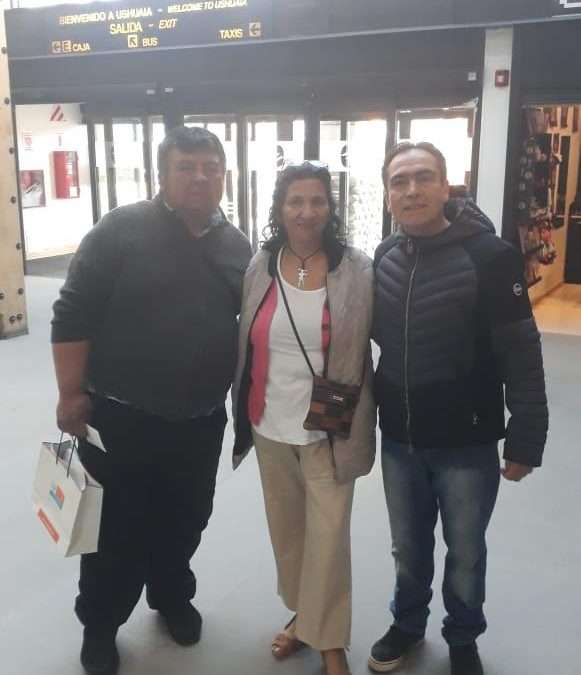
Mirtha Salamanca, integrante de la comunidad selk´nam de Río Grande, Víctor Vargas, integrante del pueblo yagán de Ushuaia y José González Calderón, de la comunidad yagán de Puerto Williams viajan a Francia a exponer sobre las culturas ancestrales originarias de Tierra del Fuego.
Mirtha Salamanca es integrante del Consejo Nacional de Pueblos Indígenas, como representante del pueblo selk´nam. “Viajaremos a Francia invitados por investigadores de ese país, para visibilizar allí nuestra cultura ancestral y complementar una serie de investigaciones que estamos realizando sobre nuestro pueblo. Además de participar como expositores en charlas y conferencia en distintas partes del país, podremos visitar los archivos de Anne Chapman, quien fue una gran investigadora de nuestra cultura y complementar los estudios que nosotros venimos realizando para dar a conocer nuestra cosmovisión. Tenemos la esperanza de que esto promueva el arraigo a nuestra tierra y el derecho a la identidad originaria” expresó.
Por su parte, Víctor Vargas es autor del libro “Mi Sangre Yagán”, editado en 2017 por la Editora Cultura Tierra del Fuego y trabaja en el Museo del Fin del Mundo de Ushuaia, desde donde promueve mediante charlas e investigaciones, la cultura e historia de su pueblo. “Esto se trata de unir el pasado con el presente. Los yaganes son la comunidad humana que habitó de forma permanente la parte más al sur de todo el continente.
En cuanto a José González Calderón, reside en Puerto Williams, Chile y cabe destacar que es sobrino de Cristina Calderón, quien fue declara tesoro humano vivo, ya que es la última hablante nativa viva de su lengua yagán. Este año, ha sido declarado por la ONU el año internacional de las lenguas indígenas.