The Ley de Glaciares in Argentina (Glacier Law): context, reform, and resistance

Karukinka
15 April 2026
Association Karukinka
Law 1901 - of General Interest
Latest news
Follow us
Law 26.639, also know as Ley de Glaciares and enacted in 2010, established in Argentina the Minimum Budgets Regime for the Preservation of Glaciers and the Periglacial Environment, legally cementing the idea that glaciers are strategic freshwater reserves and public goods. Starting in 2025–2026, the national government pushed forward a project for a comprehensive modification of this norm (File 0161-PE-2025), which obtained half-sanction in the Senate and approval from the Chamber of Deputies, generating strong political and social conflict.
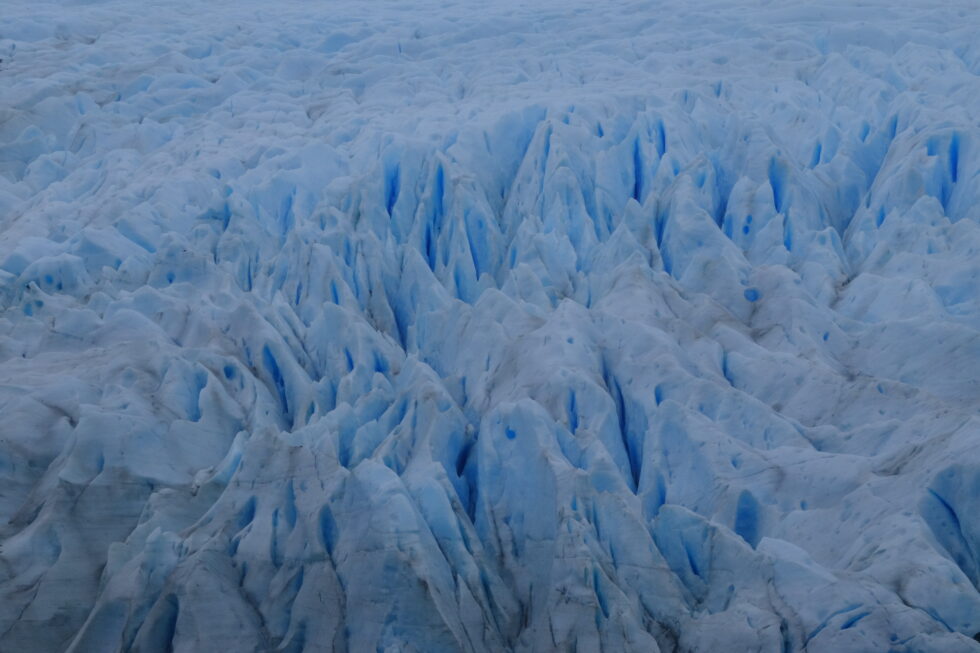
This article outlines the core content of the existing law, the main adopted modifications, the role of the provinces, as well as the social mobilizations and the interventions of Indigenous peoples—notably the Selk'nam jurist Antonela Guevara—who denounce the potential impacts of this reform (risks to water, ecosystems, and territorial rights).
Table of Contents
Law 26.639 (2010): content and scope
Purpose and principles
Article 1 of Law 26.639 sets the objective of establishing minimum budgets for the protection of glaciers and the periglacial environment, recognizing them as strategic reserves of water resources for human consumption, agriculture, watershed recharge, biodiversity protection, scientific research, and tourism. Glaciers are explicitly declared public goods.
The Library of Congress highlights that this law falls under the framework of Article 41 of the National Constitution (right to a healthy environment, national minimum budgets) and the General Environmental Law 25.675, which enshrines the principles of prevention, precaution, and non-regression.
Definitions: glacier and periglacial environment
Article 2 defines a glacier as any perennial ice mass, stable or slowly flowing, formed by the recrystallization of snow, regardless of its shape, dimension, or state of conservation; this includes rocky detrital materials and internal or superficial watercourses.
The periglacial environment is defined, in high mountains, as the area of frozen soils that acts as a water regulator, and in medium and low mountains, as the area with ice-saturated soils that plays the same regulatory role. These very broad definitions extend the scope of protection to forms of ice and frozen soils that go beyond just large visible glaciers.
National Glacier Inventory of Argentina (ING)
Articles 3 and 4 create the National Glacier Inventory, entrusted to the Argentine Institute of Nivology, Glaciology and Environmental Sciences (IANIGLA-CONICET), tasked with identifying all glaciers and periglacial landforms acting as water reserves, including their location, surface area, typology, and the variables necessary for their protection and monitoring.
The Legislative Dossier of the Library of Congress notes that Decree 207/2011 specified the organization of the ING by major glaciological regions (Desert, Central, Northern and Southern Patagonian Andes, Tierra del Fuego, and South Atlantic Islands) and mandated an update at least every five years.
Prohibited activities
Among its most important provisions, the law prohibits certain activities in glaciers and the periglacial environment, particularly:
- mining and hydrocarbon exploration and exploitation;
- the installation of industries;
- the construction of works or infrastructure that could alter the natural dynamics of the ice or water quality (except for scientific research);
- the storage or handling of contaminating or hazardous substances.
Any activity that may significantly affect these environments must be subject to a prior environmental impact assessment, in accordance with the General Environmental Law.
The 2025–2026 reform project: objectives and core modifications
Political context and stated objectives
In December 2025, the national executive branch submitted to the Senate Expediente 0161-PE-2025, aiming to amend Law 26.639, arguing the need to correct "interpretative flaws," lift legal uncertainties, and facilitate investments, particularly in mining. According to an analysis by Infobae, the executive presents the reform as a way to strengthen "environmental federalism" by giving provinces a greater role in managing their resources.
The project obtained 40 votes out of 72 in the Senate (40 in favor, 31 against, 1 abstention), with the support of part of the Radical Civic Union, Pro, and Peronist senators from mining provinces, before being passed to the Chamber of Deputies. In the lower house, the reform was ultimately approved by 137 votes in favor, 111 against, and 3 abstentions, and then sent to the executive for promulgation.
Redefinition of the inventory: "that act as reserves"
One of the most significant changes concerns Article 3 of the law, relating to the National Glacier Inventory. The new text, as described by the newspaper Ámbito, now stipulates that the ING will inventory glaciers and periglacial areas that "act as strategic reserves of water resources," instead of those that "fulfill the functions" of a reserve.
This substitution seems minor lexically, but the Library of Congress Dossier points out that it contributes to a re-definition of the extent of protected areas, by conditioning protection on the demonstration of an effective hydrological function rather than the mere presence of perennial ice. Provincial authorities are called upon to play a central role in this assessment.
Precautionary principle and possibility of subsequent exclusion
The reform introduces an Article 3 bis, which specifies, according to the text analyzed by Ámbito, that:
- all glaciers and periglacial areas registered in the inventory will be considered part of the protected object until the competent authority verifies the non-existence of the hydrological functions defined in Article 1;
- further on, it stipulates that when it is determined, based on technical-scientific studies, that a glacier or periglacial area "does not fulfill the intended functions," it may be considered excluded from the protected object.
We thus shift from a broad presumption of protection (any perennial ice mass in a periglacial environment) to a logic where the Inventory becomes a filtering tool, with the possibility of declassifying glacial units based on specific analyses.
Terminology: from "periglacial environment" to "periglacial landforms"
Several terminological modifications replace the expression "periglacial environment" with "periglacial landforms" (geoformas periglaciares) in the articles relating to the inventory and the competencies of authorities. For critics, this semantic substitution tends to fragment the object of protection (from the environment as a system to isolated landforms), which could reduce the territorial scope of the law.
Provincial competencies and the role of IANIGLA
The reform strengthens the mention of provincial authorities as "competent authorities," tasked with identifying, based on technical-scientific evidence, which glaciers and periglacial areas located in their territory fulfill certain hydrological functions. Where the previous version spoke of "sharing" information with IANIGLA, the new drafting replaces it with "notifying" the institute of the recorded ice bodies.
The Library of Congress Dossier indicates that these changes are at the heart of the debate on environmental non-regression: the fear is that provincial authorities subject to strong economic pressures might reclassify areas based on their hydrological functions, thereby reducing the extent of the protection regime.
Prohibited activities and environmental assessments
Article 6 (prohibited activities) is also amended. The new text maintains the catalog of prohibited activities (activities that "relevantly" alter the natural condition or hydrological functions, destruction, displacement, interference with ice advance, etc.), but now specifies that the severity of the alteration must be assessed "in the terms of Article 27 of the General Environmental Law 25.675," thus referring back to the environmental framework legislation.
The text confirms the obligation to subject any activity in glaciers and periglacial areas to environmental impact assessments, guaranteeing an instance of citizen participation in accordance with Articles 19 to 21 of the General Environmental Law. However, opponents argue that the reduction of the protected area makes these guarantees less effective.
Social mobilizations and territorial resistance
National mobilizations: "The Glacier Law is not to be touched"
The prospect of reforming Law 26.639 triggered a wave of mobilizations starting in late 2025, peaking during the debates in the Senate (February 2026) and the Chamber of Deputies (April 2026). Infobae and other Argentine media outlets reported massive demonstrations in Buenos Aires in front of the Congress, convened under the slogan "La Ley de Glaciares no se toca" ("The Glacier Law is not to be touched"), with a torchlight march and an artistic festival lasting until midnight.
Environmental organizations and citizen assemblies gathered for this day assert that the proposed changes endanger 7 million people and 36 watersheds deemed vital for various regions of the country, by opening the door to extractive activities in currently protected areas. Demonstrators insist that the reform "allows intervention in areas that the current law protects" and that it compromises access to water as a fundamental right.
Territorial mobilizations: the case of El Calafate
In El Calafate (Santa Cruz province), at the foot of the Perito Moreno glacier, mobilizations have followed one another: in February 2026, a new demonstration "in defense of the glaciers" was held simultaneously with the Senate vote, under the slogan "The Glacier Law is Not to Be Touched." According to local media Ahora Calafate, this was the fourth mobilization of the year 2026 in the city, with a march starting from Perito Moreno Square to the governor's official residence.
Organizers emphasize that "water and glaciers are non-negotiable" and announced further actions if the reform is approved, directly linking glacier protection to water security and the regional tourism development model.
Intervention of Indigenous peoples and the role of Antonela Guevara
A Selk'nam voice in the national debate
In this context, the jurist Antonela Guevara, lawyer for the Selk'nam community and a leading figure in the plurinational environmental campaign, became one of the most visible Indigenous voices in the debate over the Glacier Law. In an interview with Radio Provincia relayed by the media outlet Tarde pero Seguro, she stated that the modification of the law was decided "without social license and with a public hearing that was a farce," calling it "anti-regulatory" and "lacking real democracy."
Guevara denounces that more than 100,000 people who participated in the expanded consultation process were "silenced" and that the discussion is presented as purely technical, when "we are talking about water, about the present and future of life." She points out that the Selk'nam people have occupied the territory for over 10,000 years and asserts that the reform is intimately linked to commitments made by the government to the IMF and multinational corporations, rather than to the interest of citizens.
Glaciers, water, and prolonged genocide
In statements relayed on social media by Argentine Indigenous organizations, Antonela Guevara describes the modification of the law as a "new genocide" that threatens not only the glaciers but also the wetlands (humedales) and watersheds upon which Indigenous communities depend. She draws a connection between the current reform and local precedents, such as the salmon farming project in Tierra del Fuego, highlighting a similar logic of decisions made without genuine consultation and last-minute modifications.
Presenting herself as an "Indigenous woman and member of a people who have resisted for centuries," she insists that her participation in the national debate is not motivated by partisan affiliation, but by the defense of future generations, water, and ancestral territories.
Denounced potential impacts
Reduction of protected areas and risk of environmental regression
Analyses by the Library of Congress and Argentine economic media converge in stating that the reform "redefines the extent of protected spaces" by conditioning protection to glaciers and periglacial areas that demonstrate an effective hydrological function. This approach is perceived by many jurists and environmentalists as potentially regressive, contradicting the principle of non-regression enshrined in Argentine environmental doctrine.
Specifically, the fear is that small glaciers, buried ice zones, or frozen soils that play a water storage and regulation role—but are difficult to characterize—could be excluded from the specific regime, paving the way for mining, energy, or infrastructure projects.
Mining pressure and socio-environmental conflicts
Articles from La Nación and Infobae recall that one of the explicit goals of the reform is to "enable mining investments," particularly in copper and lithium, in areas hitherto considered protected by Law 26.639. The Andean provinces with a strong extractive focus (San Juan, Catamarca, Jujuy, Mendoza, etc.) occupy a central place in this debate, with some of their representatives having voted in favor of the reform in the Senate.
Mobilized organizations denounce that by weakening the perimeter of protected spaces, the reform risks intensifying existing socio-environmental conflicts surrounding large high-mountain mining projects, by reducing the legal instruments available to local communities and municipalities opposing them.
Threats to water and wetlands (humedales)
Actors in the "La Ley de Glaciares no se toca" campaign insist that the discussion is not just about visible ice, but the entire water cycle: aquifers, wetlands, catchments, and seasonal regulation. By limiting protection to glaciers and periglacial areas whose hydrological function is proven, the reform could, according to them, neglect complex hydrological systems whose contribution is not immediately quantifiable.
Antonela Guevara and other Indigenous spokespersons emphasize that these environments are intimately linked to the survival of their communities and their cosmologies, meaning that their alteration amounts to a new form of territorial and cultural violence.
Bibliographie
ARGENTINA. Ley 26.639: Régimen de Presupuestos Mínimos para la Preservación de los Glaciares y del Ambiente Periglacial [online]. Buenos Aires: InfoLEG / Argentina.gob.ar, 2010 https://www.argentina.gob.ar/normativa/nacional/ley-26639-174117/texto
BIBLIOTECA DEL CONGRESO DE LA NACIÓN. Glaciares: dossier legislativo sobre la reforma de la Ley 26.639 [online]. Buenos Aires: BCN, 2026 https://bcn.gob.ar/uploads/adjuntos/Dossier-332-legis-nacional-glaciares-mar-2026.pdf
IANIGLA-CONICET. Inventario Nacional de Glaciares [online]. Mendoza: IANIGLA, s. d. https://www.glaciaresargentinos.gob.ar/
CÁMARA DE DIPUTADOS DE LA NACIÓN ARGENTINA. Proyecto de modificación de la Ley 26.639: tratamiento parlamentario 2025–2026 [online]. Buenos Aires: HCDN, 2026 https://www.hcdn.gob.ar/
SENADO DE LA NACIÓN ARGENTINA. Dictamen y votación del proyecto de reforma de la Ley de Glaciares [online]. Buenos Aires: Senado de la Nación, 2026 https://www.senado.gob.ar/
ÁMBITO. Ley de Glaciares: el Senado introdujo cambios de último momento al dictamen aprobado [online]. Buenos Aires: Ámbito, February 25, 2026 https://www.ambito.com/energia/ley-glaciares-senado-introduce-cambios-ultimo-momento-al-dictamen-aprobado-n6250028
LA NACIÓN. Con los votos justos, el Gobierno apuesta a cambiar la Ley de Glaciares en el Senado [online]. Buenos Aires: La Nación, February 26, 2026 https://www.lanacion.com.ar/politica/con-los-votos-justos-el-gobierno-apuesta-a-cambiar-la-ley-de-glaciares-en-el-senado-nid2602...
INFOBAE. Qué establece la Ley de Glaciares y cómo son los cambios que propone la reforma [online]. Buenos Aires: Infobae, February 14, 2026 https://www.infobae.com/america/medio-ambiente/2026/02/15/que-establece-la-ley-de-glaciares-y-como-son-los-cambios-que-propone-l...
AHORA CALAFATE. Nueva movilización en defensa de los glaciares en simultáneo con la votación en el Congreso [online]. El Calafate: Ahora Calafate, February 26, 2026. https://www.ahoracalafate.com.ar/contenido/38261/nueva-movilizacion-en-defensa-de-los-glaciares-en-simultaneo-con-la-votacion-en-
TARDE PERO SEGURO. Antonela Guevara: “La modificación de la Ley de Glaciares se hizo sin licencia social” [online]. Argentina, April 8, 2026. https://tardeperoseguro.com.ar/?p=52515
ORIGINARIOS.AR. Antonela Guevara: intervenciones sobre la reforma de la Ley de Glaciares [online]. Argentine, s. d. https://originarios.ar/
An exceptional sale of Yagan craftsmanship: whalebone harpoons and coihue-bark canoes signed by José
Candelariella magellanica and Sclerococcum nothofagi: two new species discovered on Navarino Island
Chile recognises the Selk’nam as a living indigenous people

Cercophana frauenfeldii Felder, 1862 (Lepidoptera: Saturniidae): Taxonomy, Ecology and Presence in the Far South of Chile
Peatlands of Tierra del Fuego: peat mosses and liverworts, the silent architects of the austral bogs