An exceptional sale of Yagan craftsmanship: whalebone harpoons and coihue-bark canoes signed by José

Karukinka
10 August 2026
Association Karukinka
Law 1901 - of General Interest
Latest news
Follow us
yagan craftsmanship
He works bone and bark the way others work the wood of a violin: with the memory of gestures passed down through generations, more than through mere technical skill. José German Gonzalez Calderon, fishing captain, former president of the Yagan community of Chile and honorary member of our association, is exceptionally opening for sale a series of pieces crafted by his own hands: whalebone harpoons and sewn coihue-bark canoes, made using the ancestral navigation and hunting techniques of the Yagan people of the Fuegian channels.
Karukinka is pleased to present this preview sale, open to members of the association, to enthusiasts of southern cultures, and to museums wishing to acquire collection pieces.
José German Gonzalez Calderon, keeper of a recognized craft
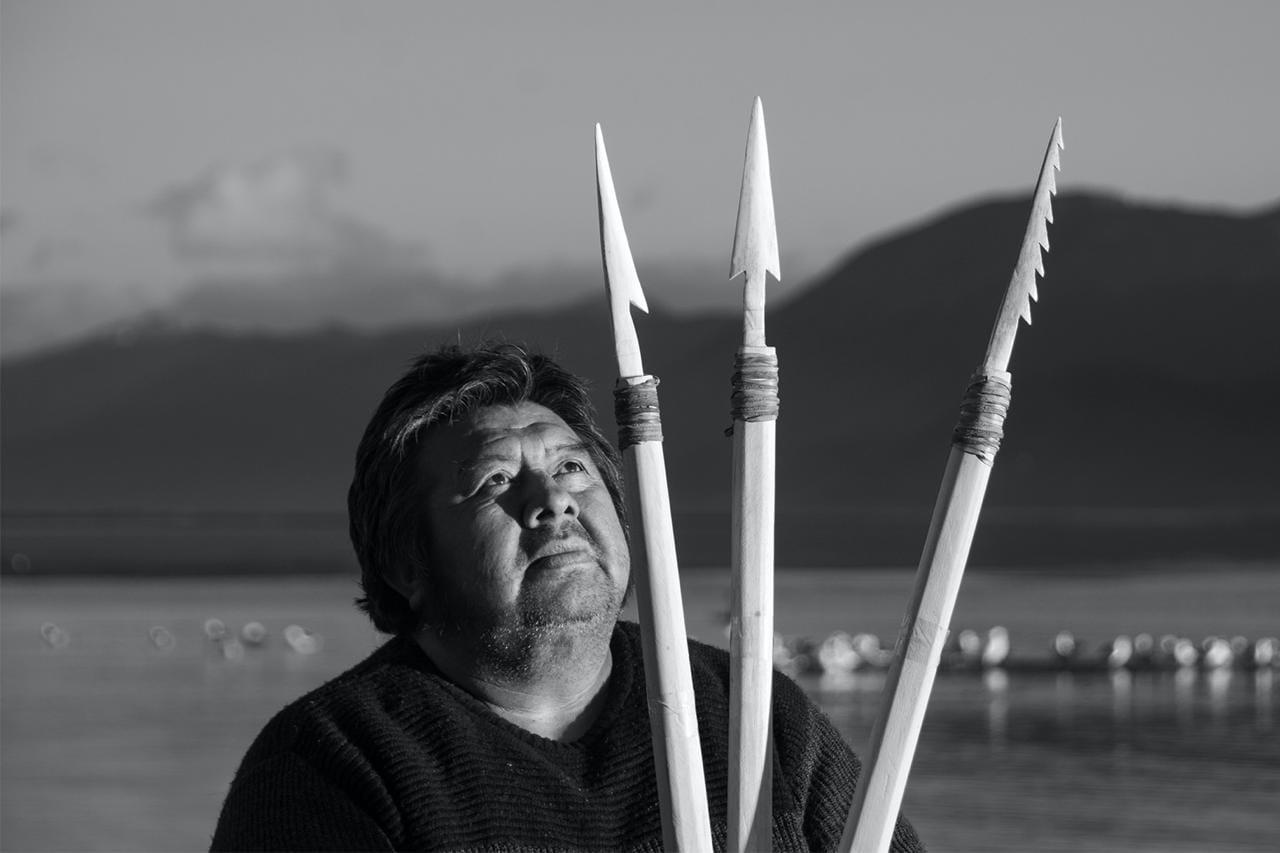
José belongs to the last generation of Yagan navigators who grew up living a nomadic life, in direct contact with the traditional techniques of boatbuilding and maritime hunting practiced in the channels of Cape Horn. He is the godfather of the sailing vessel Milagro, the association's expedition platform in the channels of Patagonia and as far as Cape Horn, and the living link between Karukinka's scientific programme and the embodied knowledge of his people.
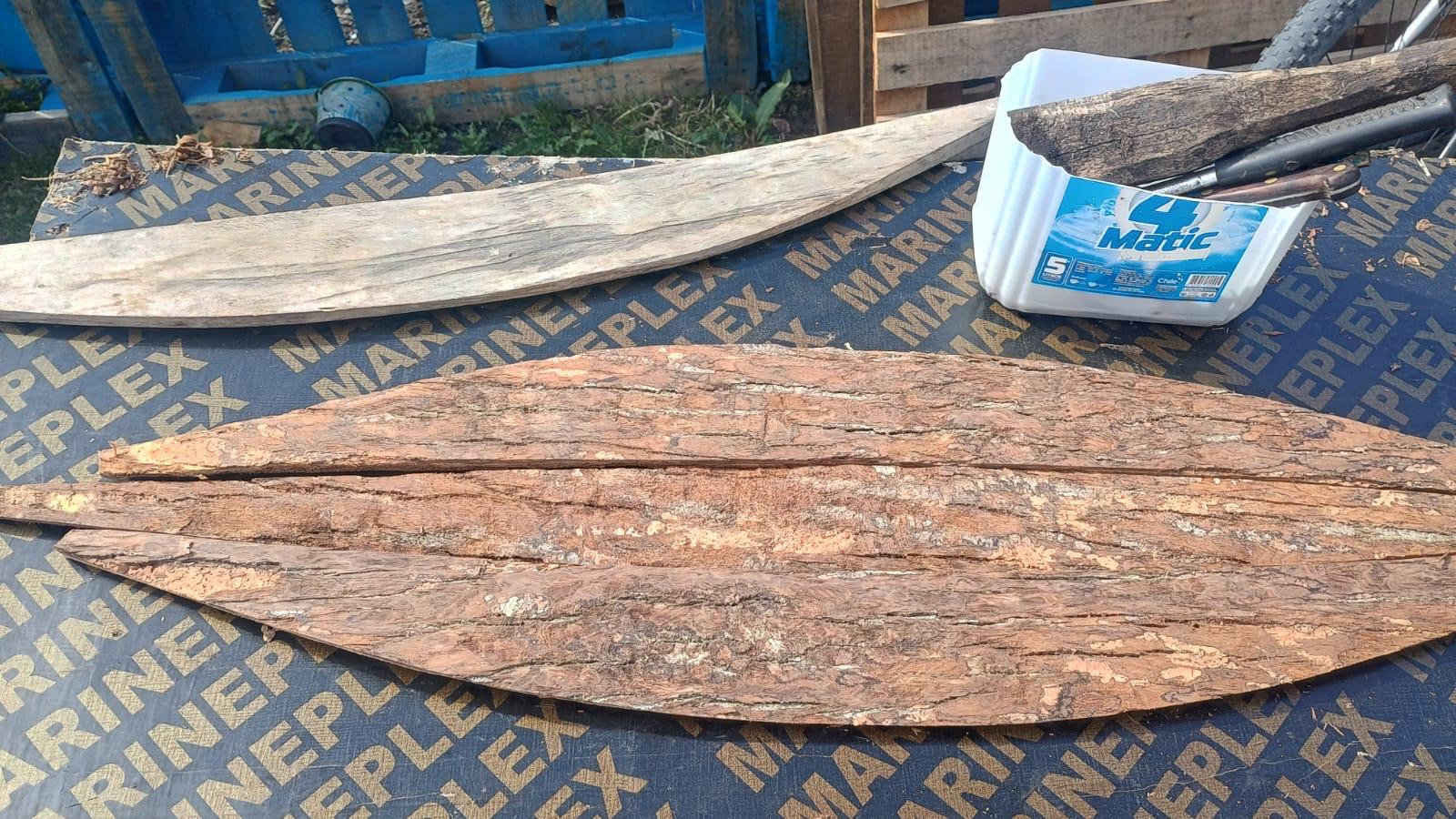
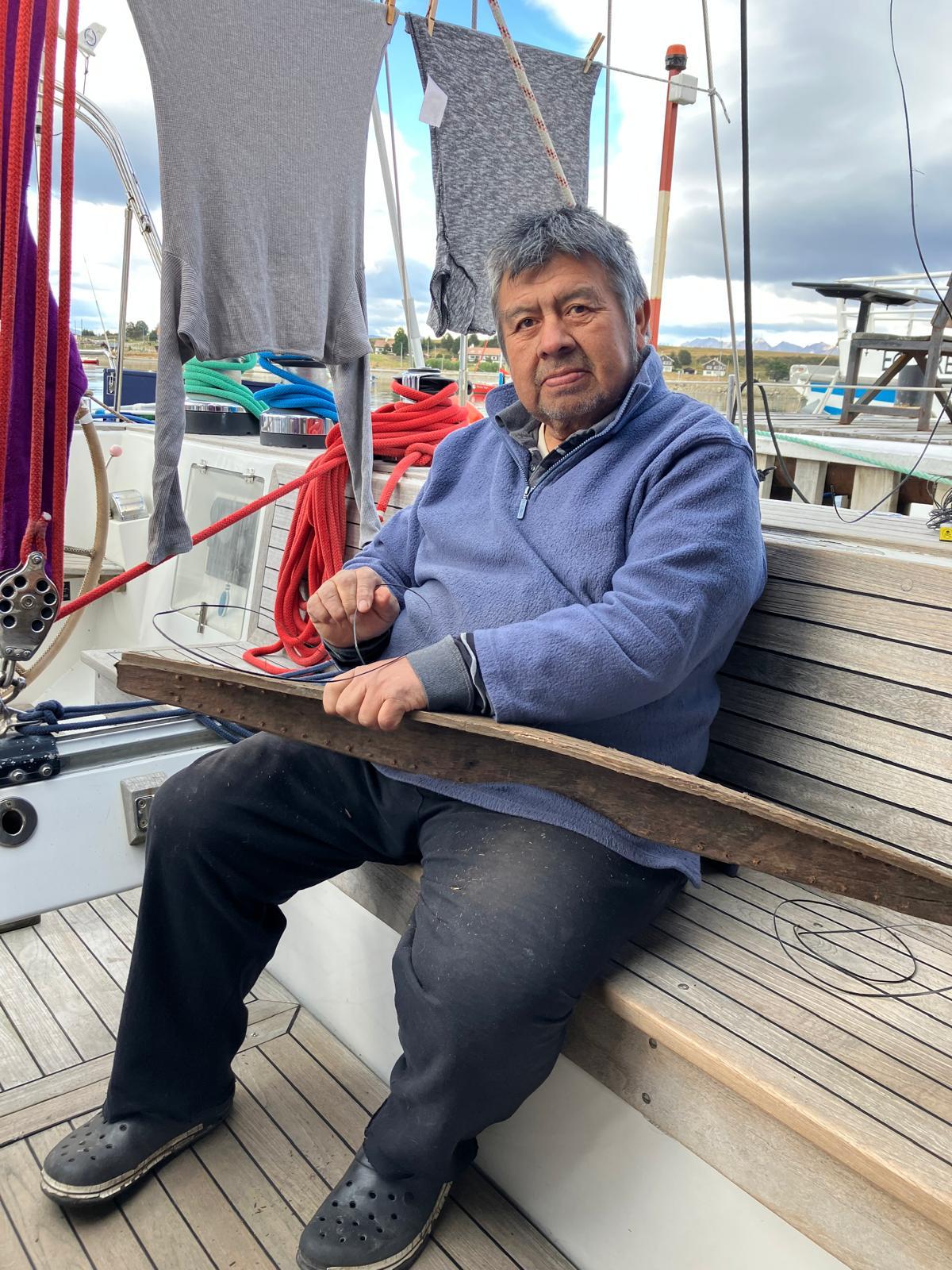
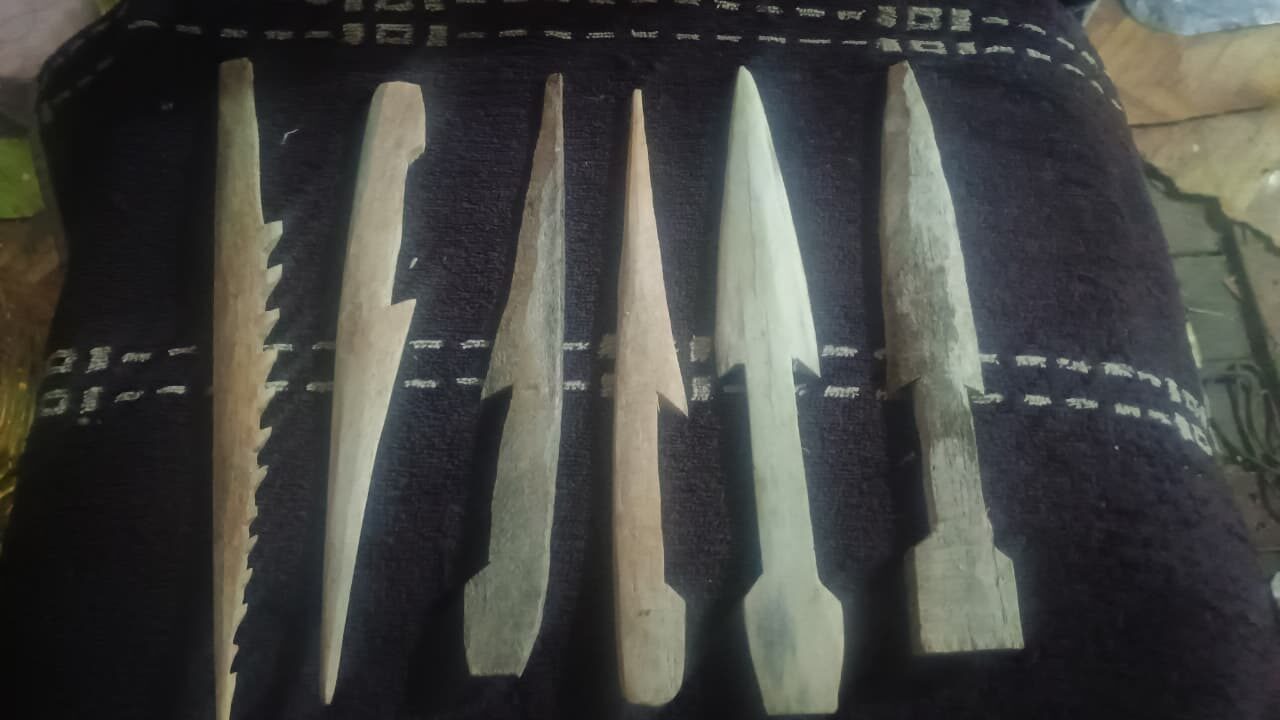
His craftsmanship — the sewn assembly of coihue-bark panels for canoe construction, and the shaping of whalebone for hunting harpoons — is recognized by UNESCO as part of efforts to safeguard the intangible cultural heritage of southern Indigenous peoples. This recognition attests to the heritage value of gestures that very few people are still able to reproduce today.
Canoes of varying sizes, accompanied by their emblematic pieces
Each canoe offered for sale is unique: José crafts them in different sizes, depending on requests and the time required for their making. No two pieces are identical, which gives each canoe the status of a collector's item in its own right.
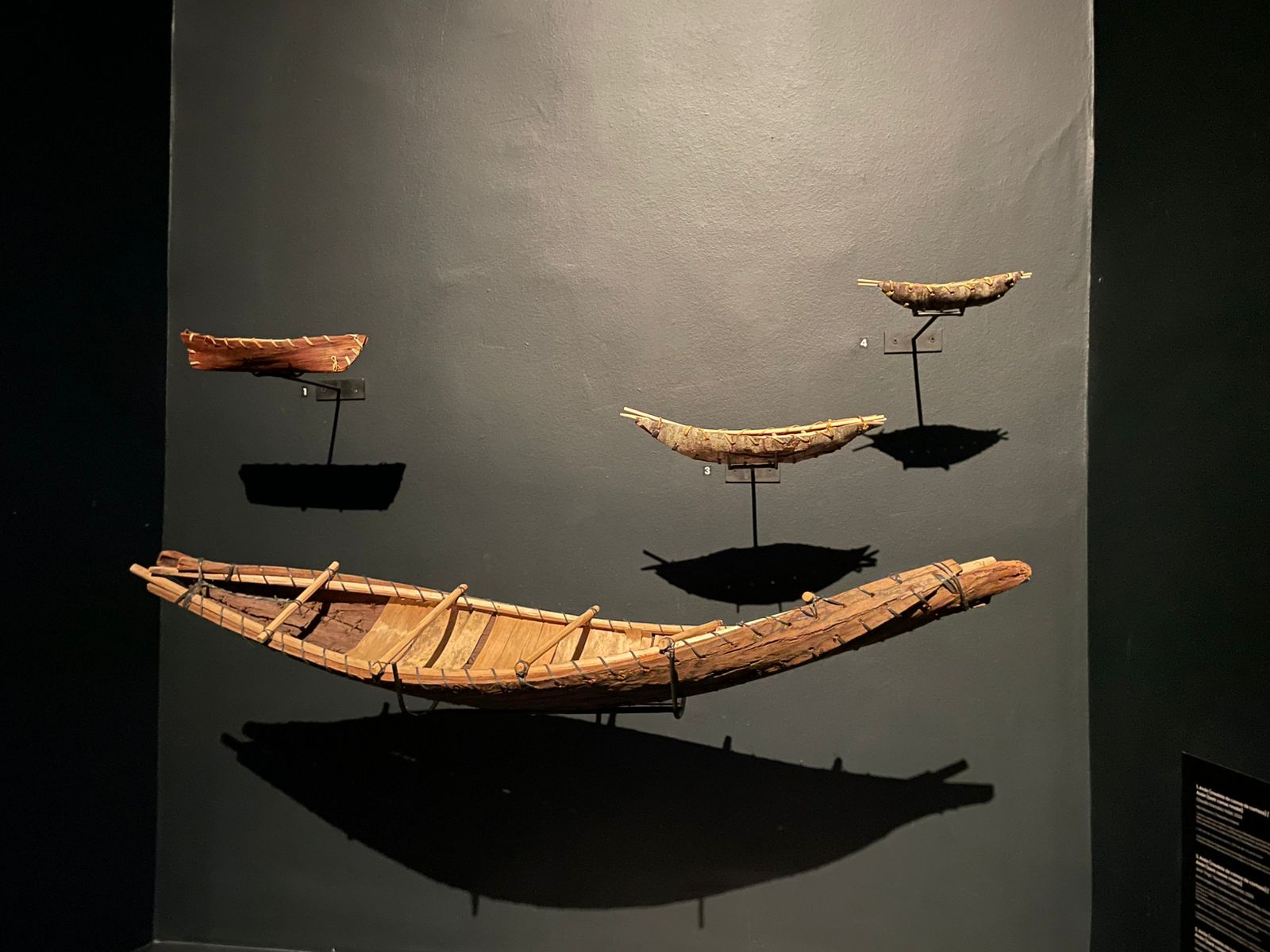
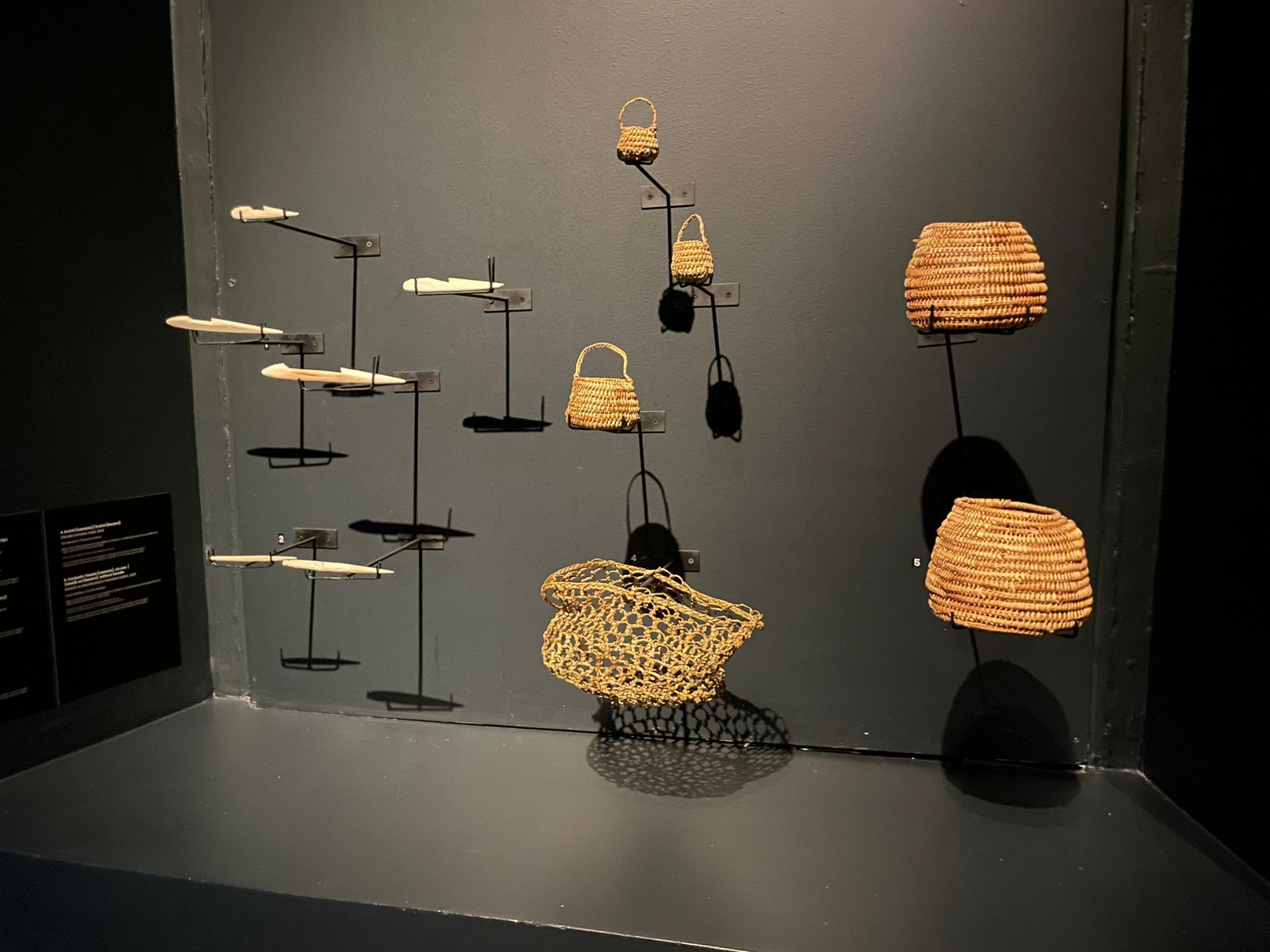
Each canoe comes with a set of miniaturized emblematic pieces, faithfully reproducing the everyday tools and objects of Yagan maritime life:
- A man's paddle and a woman's paddle, with distinct shapes according to traditional use.
- A miniature harpoon with a whalebone tip, a faithful reproduction of the hunting harpoons.
- A sea-urchin claw, a traditional tool for marine gathering.
- A woven rush basket, used for collecting and transporting resources.
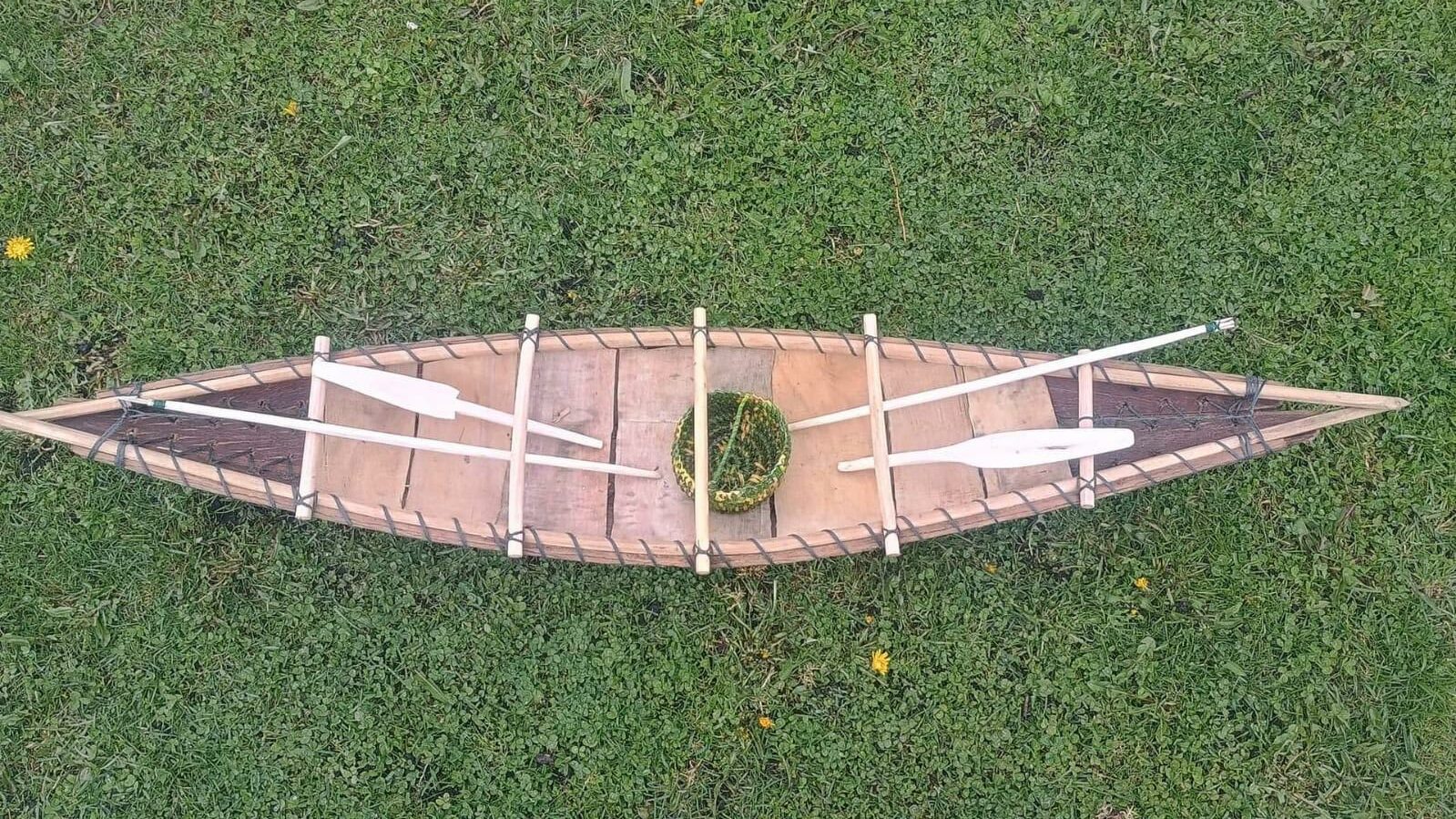
This complete set makes it possible to grasp, through a single piece, the diversity of Yagan navigation and subsistence knowledge and daily practices.
Pieces exhibited at the Museo Chileno de Arte Precolombino in Santiago
Among José's creations are harpoons and one exceptional piece: a canoe about sixty centimetres long, exhibited at the Museo Chileno de Arte Precolombino in Santiago last April, and which has accompanied Milagro's crew since the end of May between Puerto Williams and France.
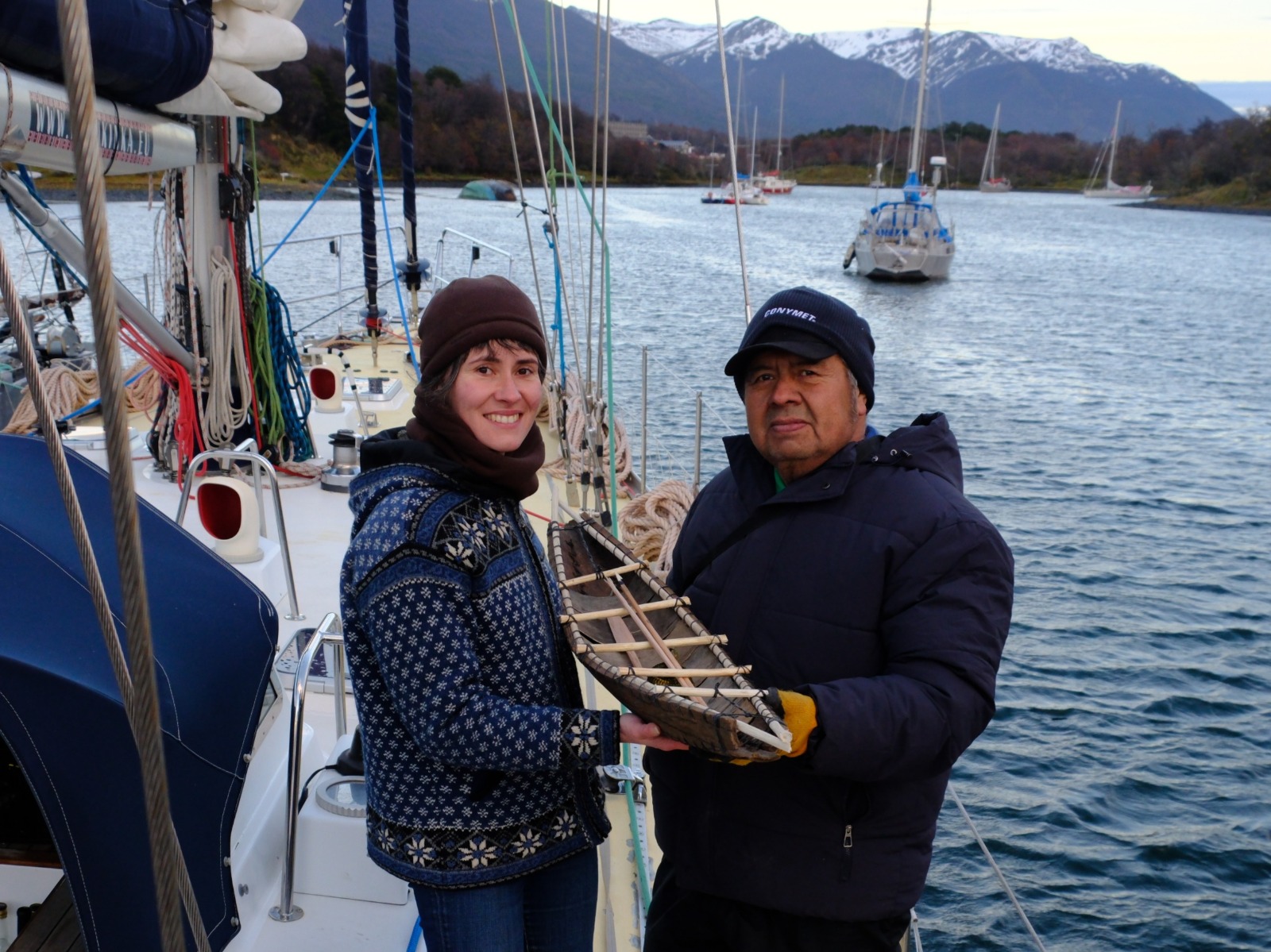
The museum's team agreed to lend this piece to the association so that it could be shared with as many people as possible over several months, including during the presentation of the association's work on Indigenous toponymy last June in Montpellier (International Conference on Inclusive Toponymy, co-organized by the UNESCO Chair in Toponymy).
This collaboration illustrates the institutional recognition enjoyed by José's creations, whose pieces naturally find their place in museum collections devoted to pre-Columbian and southern cultures.
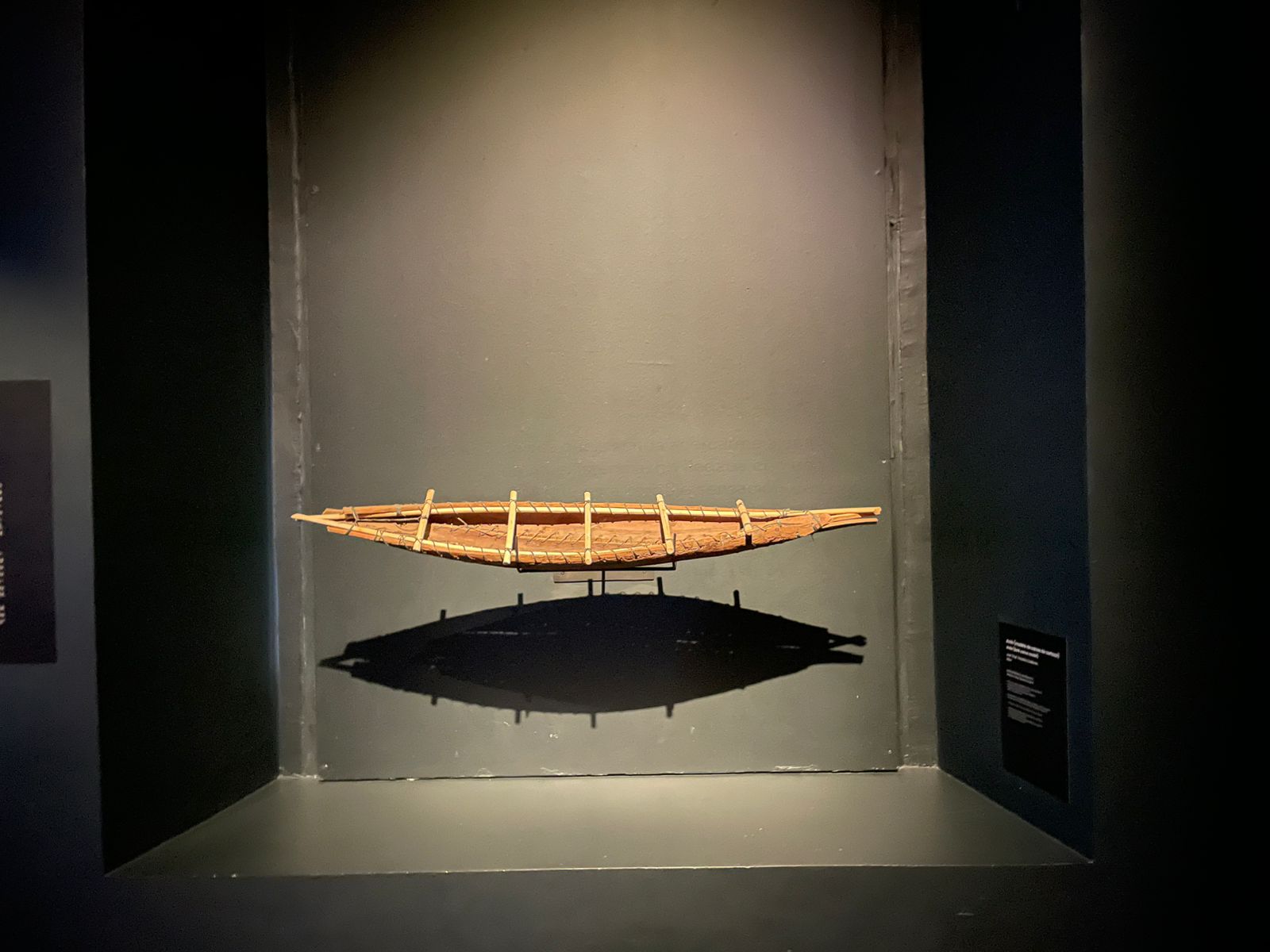
The pieces on offer
- Whalebone hunting harpoons.
- Sewn coihue-bark canoes (varying sizes), each accompanied by their miniaturized emblematic pieces (man's paddle, woman's paddle, miniature harpoon, sea-urchin claw, woven rush basket).
A preview sale entirely to the benefit of the artisan
Karukinka transfers the entirety of the proceeds from this sale to José, with no deduction whatsoever for the association. This preview sale thus aims to directly support the transmission of his craft and the economic recognition of a unique piece of intangible cultural heritage.
Who this preview sale is intended for
The preview sale is open to:
- Members of the Karukinka association, as a priority, in keeping with their closeness to the project and to José.
- Enthusiasts of southern cultures and traditional navigation wishing to acquire an authentic handcrafted piece.
- Museums and cultural institutions wishing to add to their collections a piece representative of Yagan maritime knowledge.
For any information request or reservation, interested parties may contact the association at contact@karukinka.eu or by phone at +33 6 72 83 03 94 (a first contact via WhatsApp is preferred until September 5) or at +33 2 40 56 31 95.
Candelariella magellanica and Sclerococcum nothofagi: two new species discovered on Navarino Island
Chile recognises the Selk’nam as a living indigenous people
Cercophana frauenfeldii Felder, 1862 (Lepidoptera: Saturniidae): Taxonomy, Ecology and Presence in the Far South of Chile
Peatlands of Tierra del Fuego: peat mosses and liverworts, the silent architects of the austral bogs
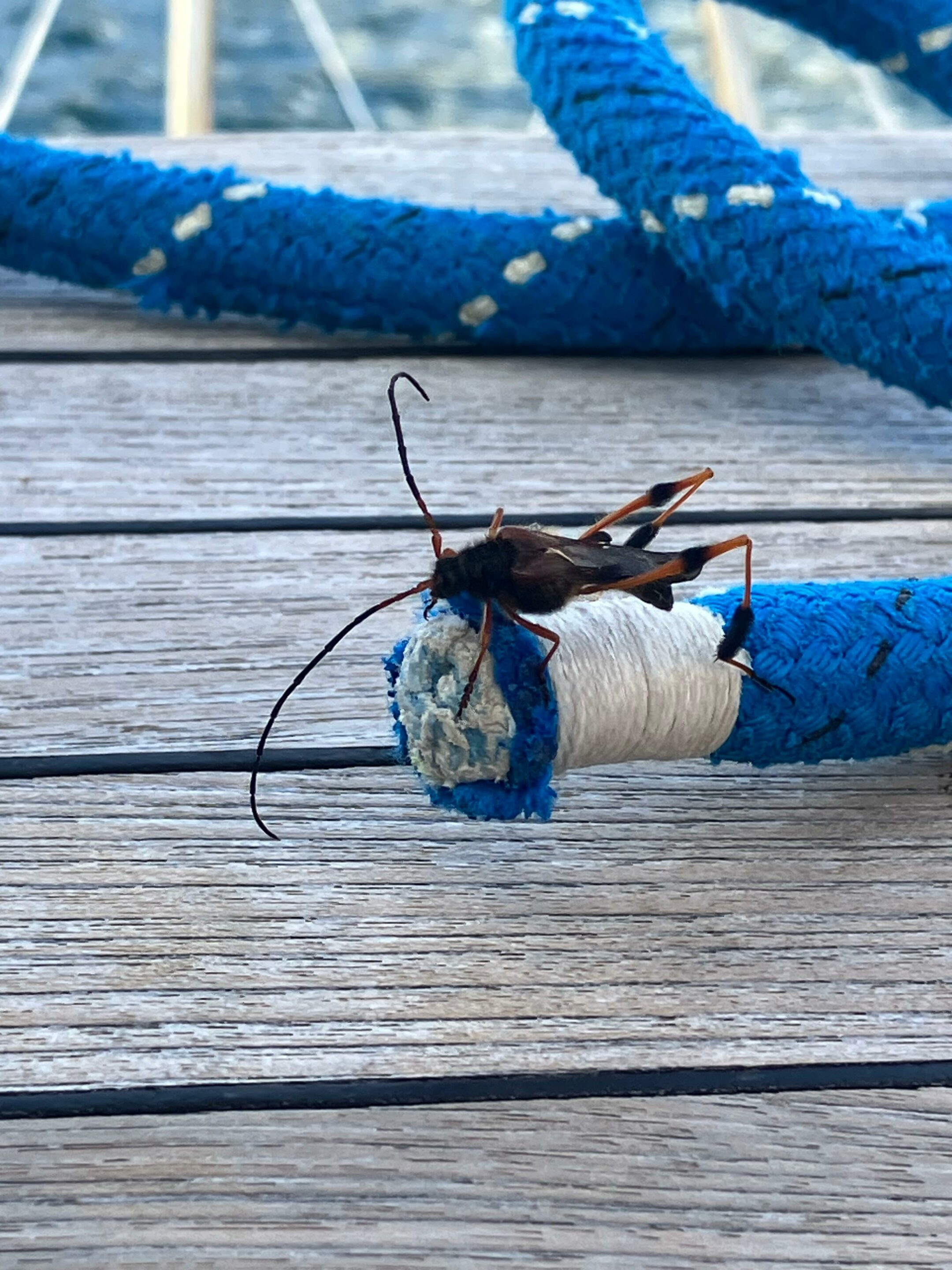
Callisphyris leptopus Philippi, a visitor during the southern storms