Coicopihue or Copihue? Philesia magellanica vs Lapageria rosea: learning to tell them apart in the Chilean forest

Karukinka
19 April 2026

Association Karukinka
Law 1901 - of General Interest
Latest news

![[Sailing Patagonian channels] Sébastien’s Logbook part 1](https://karukinka.eu/wp-content/uploads/2025/08/Caleta-eva-luna_012025_Karukinka4-scaled.jpg)


Follow us
The copihue (Lapageria rosea) and the coicopihue (Philesia magellanica) are two closely related species, both belonging to the Philesiaceae family and native to the temperate and subantarctic forests of Chile.
They resemble each other with their red bell-shaped flowers, but a few morphological, growth, and distribution traits make it possible to clearly distinguish them in the field:
Table of Content
1. Plant habit: a large climbing vine vs a small bush
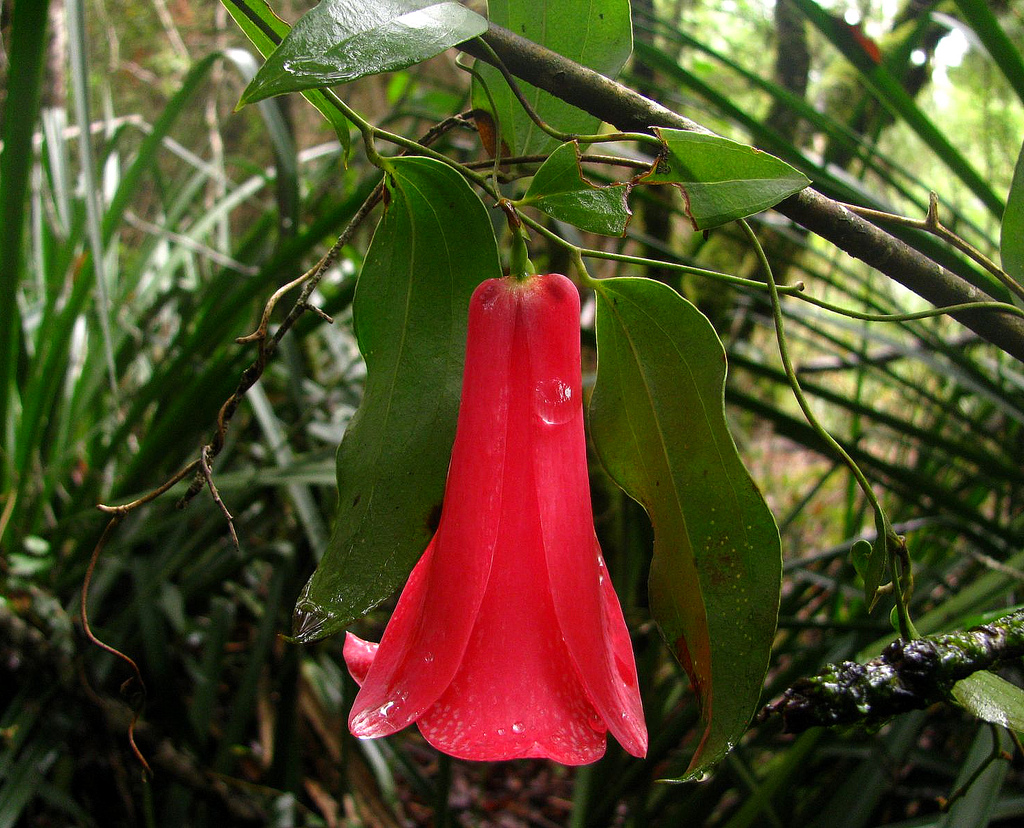
The copihue (Lapageria rosea) is a climbing vine that can reach more than 10 meters in length, twining around the trunks and branches of Nothofagus, Fitzroya, and other trees of the Chilean forest. Its thin, flexible stems give the impression of a plant climbing from the understory into the lower canopy, with vertical and airy foliage.
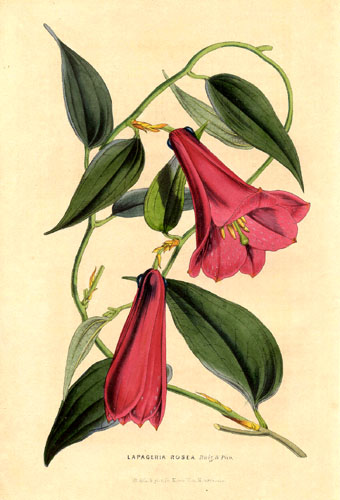
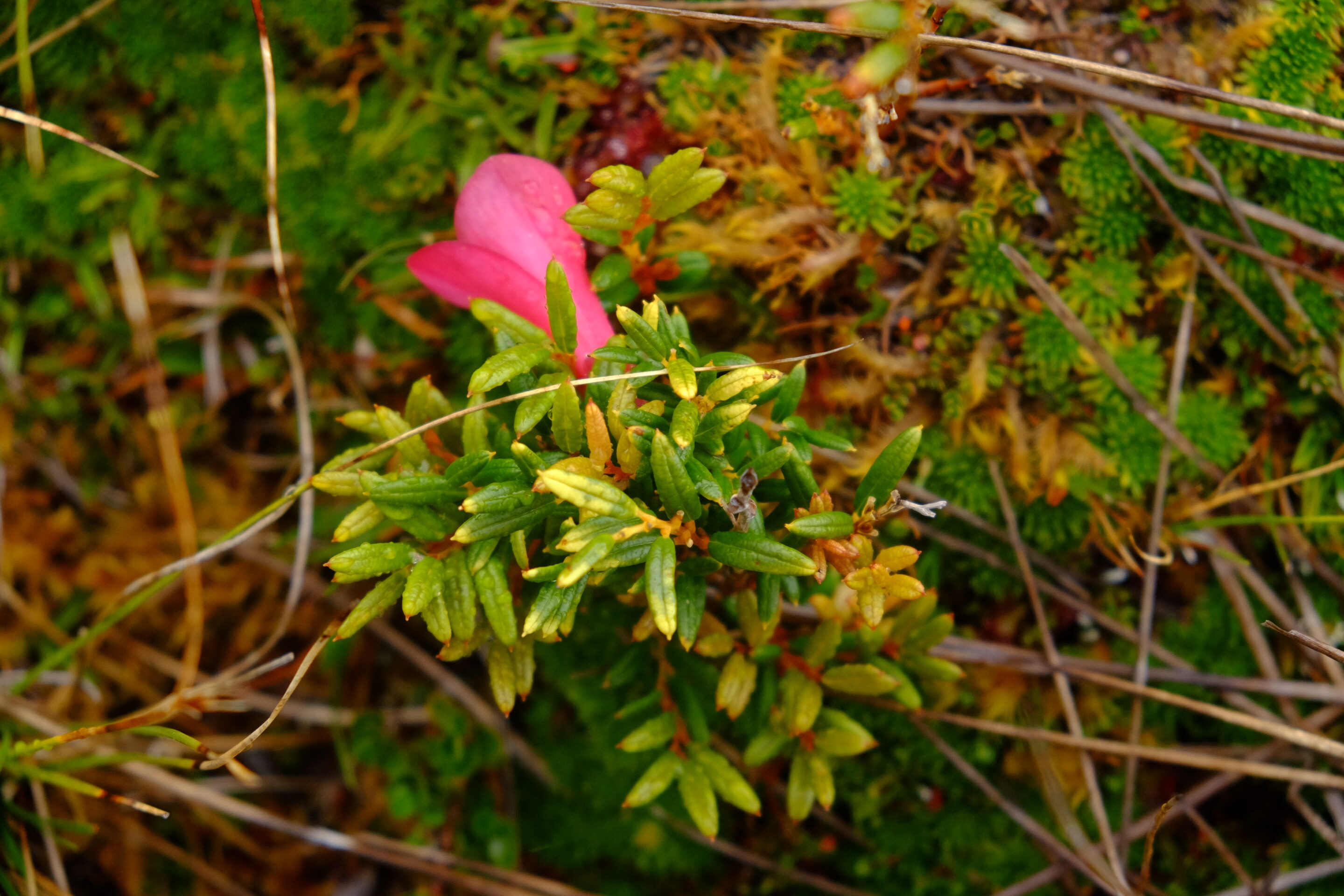
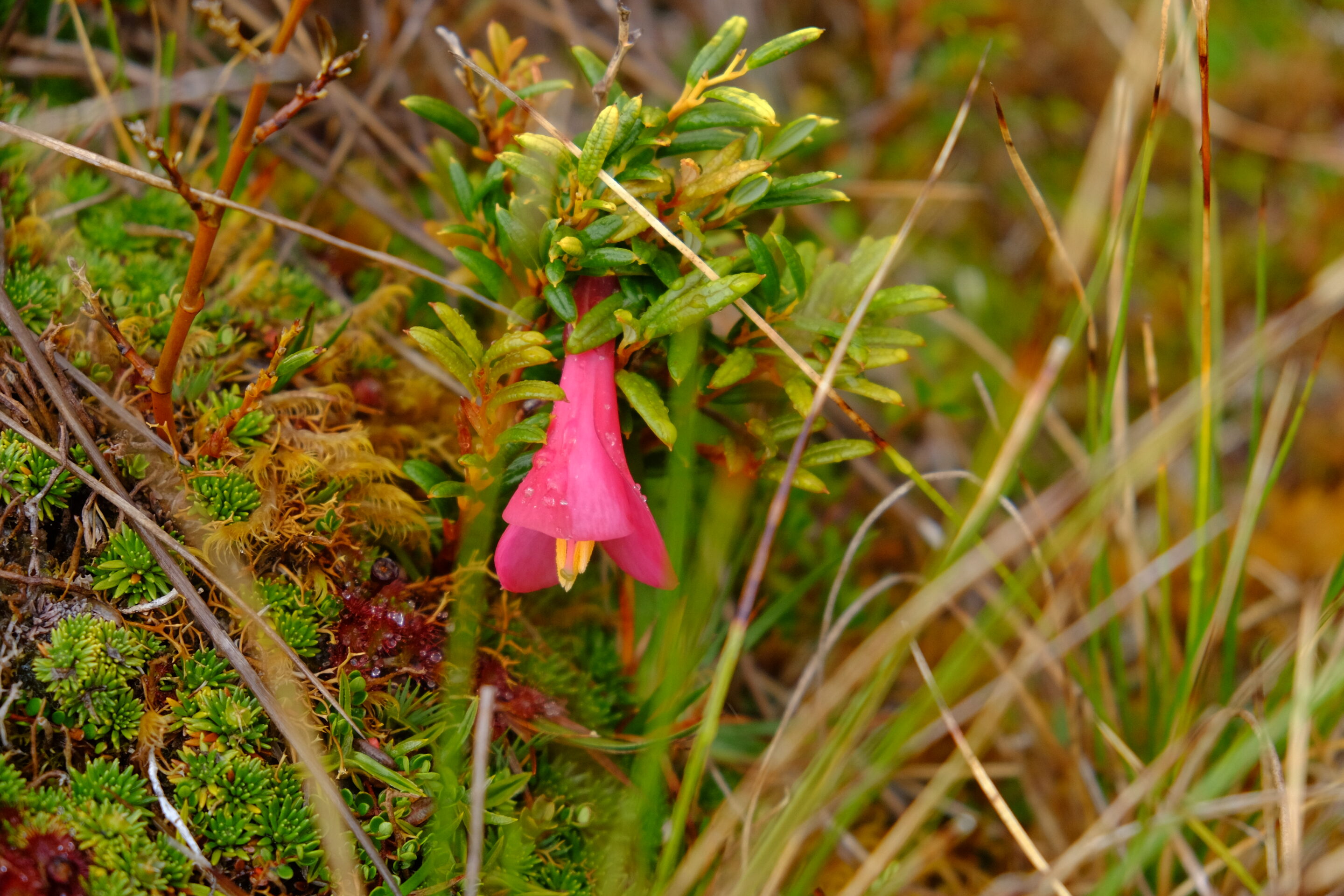
The coicopihue (Philesia magellanica), on the other hand, is mostly a small branching shrub, 1 to 3 meters high, which spreads into dense bushes through stolons and numerous secondary stems. It barely climbs, stays close to the ground, and often covers slopes, mossy rocks, or the edges of Alerce forests as a compact mass of tightly packed stems.
2. Leaves: large and veined vs small and narrow
The leaves of the copihue are alternate, long (5–10 cm), broad, and ovoid, with 3 to 5 very pronounced parallel veins that give the leaf an almost "molded" appearance. They are leathery, shiny, and highly visible along the twining stems, contributing to its imposing silhouette in the forest.
The leaves of the coicopihue, conversely, are smaller, narrow, almost linear, rigid, and end in a fine point. Dark green in color, they align tightly along thin stems, giving the plant a compact and bushy appearance, more discreet on the ground than above the trees.
3. Flowers and fruits: large open bells vs narrow bells
The copihue flower is a large hanging bell, 5 to 10 cm long, made of six thick, waxy, red or pink tepals, often streaked with white lines. Three short outer tepals are shorter, while three longer inner tepals curve outward, allowing the flower to open widely and reveal its abundant nectar, making it an attractive resource for hummingbirds.
The coicopihue flower is a smaller, short hanging bell of 5–6 cm, with petals that are tighter and open less. Their shape remains more tubular and closed, giving a more compact and less deployed appearance than that of the copihue, even though the red-pink color remains similar.
Both produce edible red berries, but those of the copihue are larger and more frequently used locally, whereas the berries of the coicopihue remain modest and scarce.
4. Distribution and habitat: further north versus further south
The copihue (Lapageria rosea) grows mostly from Valparaíso down to the Los Ríos region, in humid evergreen forests along streams, rivers, or shaded slopes, where the soil is rich and well-drained. It favors shaded valley forests at low altitudes, where humidity and protection from direct sunlight promote the vine's growth.
The coicopihue (Philesia magellanica) extends from Los Ríos down to the channels of the Cape Horn Biosphere Reserve, including the Andes mountain range (up to about 1,000 m) and the highlands of Chiloé. It tolerates heavier soils, sometimes poorly drained or even swampy (Ñadi, Hualve, tepuales types), which explains its presence in wetlands, peat bogs, and the edges of Alerce or subantarctic Nothofagus forests. Within Karukinka, we have observed it mostly on Chair Island, creeping on the damp walls of the anchorage named "Caleta Alukush" (named after the steamer ducks in Yagan) and in the heart of this small island located between Gordon Island, the fjords of the Darwin Range (Tierra del Fuego), and O'Brien Island.
5. Cultural role and how to recognize them in the field
The copihue is the national flower of Chile, declared an official symbol in 1977, and holds a central place in popular culture, art, music, and Mapuche symbolism, where it notably embodies joy, solidarity, and resistance. It is often cited in heritage tales, on tourist materials, and regional emblems, making it an easily recognizable reference.
The coicopihue is perceived as a kind of "discreet sister" to the copihue, mostly present in the southern, insular (Chiloé), and high cordillera regions, where it blooms in more demanding and often foggy landscapes. In the field, it stands out by its smaller size, bushy habit, tight bells, and its often swampy or subantarctic environment, whereas the copihue is distinguished by its large climbing vine, its large open flowers, and its valley forest environment further north.
Bibliographic references
Coronado, B. et al. (2025). Revisión de las especies Lapageria rosea y Philesia magellanica: bases para la propagación y conservación de la familia Philesiaceae en Chile. Universidad de Concepción, Facultad de Agronomía y Recursos Naturales, repositorio UdeC. Available online: https://repositorio.udec.cl/items/8448e141-02f1-4623-bfc4-598237f6023c
Fundación Claudio Gay / Fundación R.A. Philippi (2024). Ficha de Philesia magellanica J.E. Smith (coicopihue). Catálogo de la flora de Chile. Available online: https://fundacionphilippi.cl/catalogo/philesia-magellanica/
Chilebosque (n.d.). Philesia magellanica – Coicopihue. Base de datos sobre la flora de los bosques de Chile. Available online: http://www.chilebosque.cl/epiv/philesia_magellanica.html
Chileflora (2023). Descripción e imágenes de Philesia magellanica (Coicopihue), una planta de la familia Philesiaceae. Available online: http://www.chileflora.com/Florachilena/FloraSpanish/LowResPages/SH0762.htm
GoChile (2023). Copihue or Chilean bellflower in Chile. GoChile, Chile nature & tourism. Available online: https://www.gochile.cl/en/flora-fauna/copihue-or-chilean-bellflower.htm
Ladera Sur, Medios de comunicación especializados en naturaleza chilena (2025). El copihue: descubriendo los secretos de la flor nacional de Chile. Available online: https://laderasur.com/articulo/el-copihue-descubriendo-los-secretos-de-la-flor-nacional-de-chile/
Wikipedia (es) (2005). Lapageria rosea – Copihue. Available online: https://es.wikipedia.org/wiki/Lapageria_rosea

The Pacification of Araucania or Mapuche genocide ? (01/06/2025, conociendo.cl)
What role does the new 20-meter sailboat play in enabling Karukinka’s activities?
The 6th International Muralists Meeting at the End of the World has ended (InfoFueguina, 25/03/2025).

Decision to integrate the autochthonous people into the provincial consultative board of the native forests (Radio Universidad, le 26/8/2024)

Ireland-Scotland, Transatlantic, Patagonia… The 2024-2025 sailing programme is online!