
The Rayadito – Aphrastura spinicauda: an emblematic passerine of Patagonian forests and Cape Horn

Karukinka
23 March 2026

Association Karukinka
Loi 1901 - d'intérêt général
Derniers articles

Suivez nous
The genus Aphrastura (family Furnariidae) groups together small insectivorous passerines endemic to the southwestern part of South America. It historically comprises two species: the thorn‑tailed rayadito (Aphrastura spinicauda, synallaxis rayadito or espinoso rayadito), widely distributed in the temperate forests of Chile and southern Argentina, and the Masafuera rayadito (Aphrastura masafuerae), microendemic to Alejandro Selkirk Island in the Juan Fernández Archipelago.
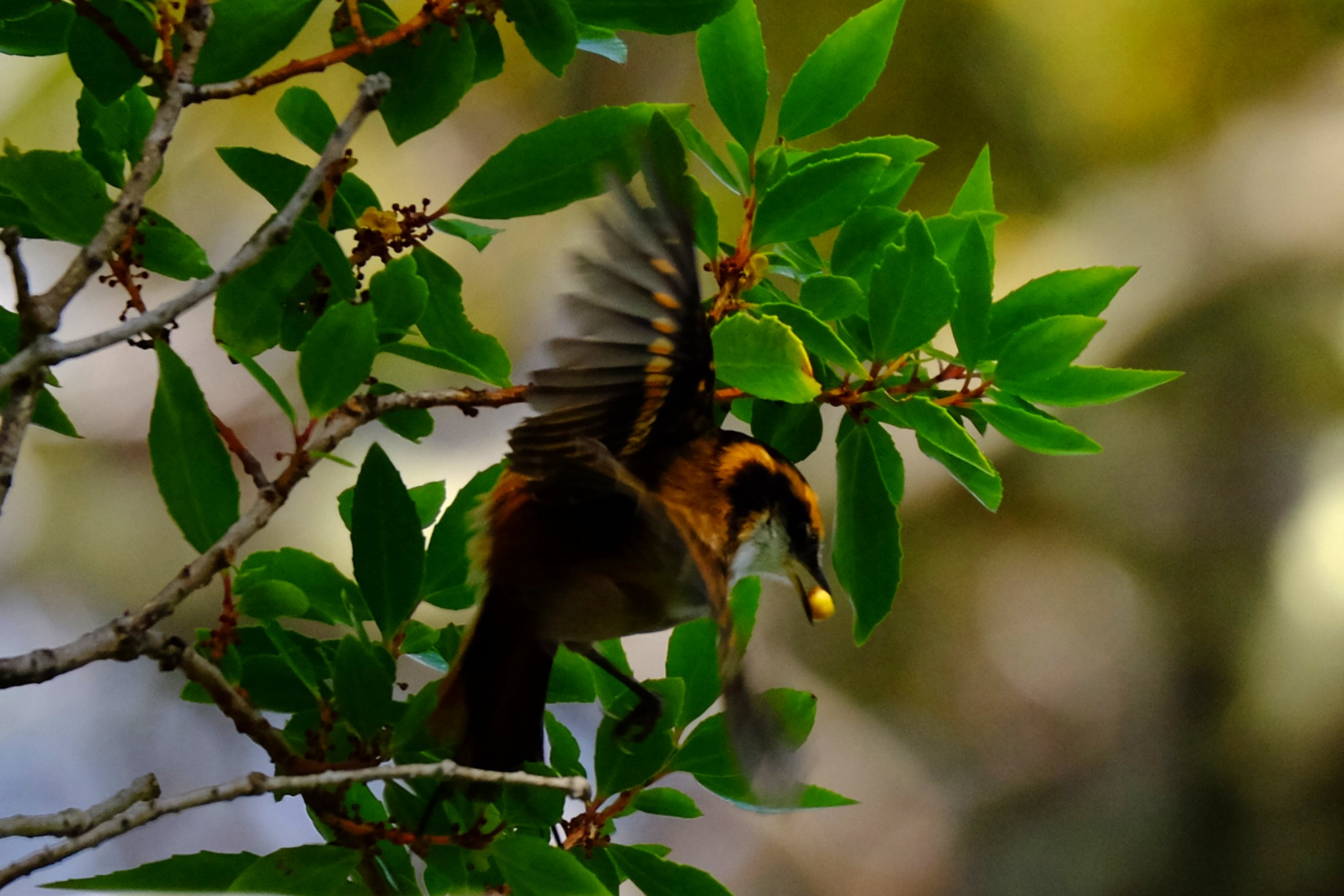
The rayaditos (in Yagán: tachikatchina) play a central role in the biology of southern temperate forests, where A. spinicauda is one of the most abundant tree‑cavity birds (and one of the most vocal!) in the Nothofagus forests, up to the southernmost limits of the Cape Horn Biosphere Reserve.
Within this subantarctic context, the recent discovery of the subantarctic rayadito (Aphrastura subantarctica) in the Diego Ramírez archipelago, to the southwest of Cape Horn, has revealed a remarkable case of island diversification within a treeless environment.
Table of contents
Distribution, diversity and ecosystems
Recent studies on the community of cavity‑using birds show that A. spinicauda is one of the most abundant passerines in southern temperate forests, with densities exceeding 9 individuals per hectare and a strong dependence on cavities excavated by the Magellanic woodpecker (Campephilus magellanicus). In contrast, A. subantarctica inhabits an herbaceous archipelago dominated by Poa flabellata and uses ground cavities or the structures of seabird nests for breeding, in the absence of terrestrial mammalian predators.
Morphology, ecology and behaviour
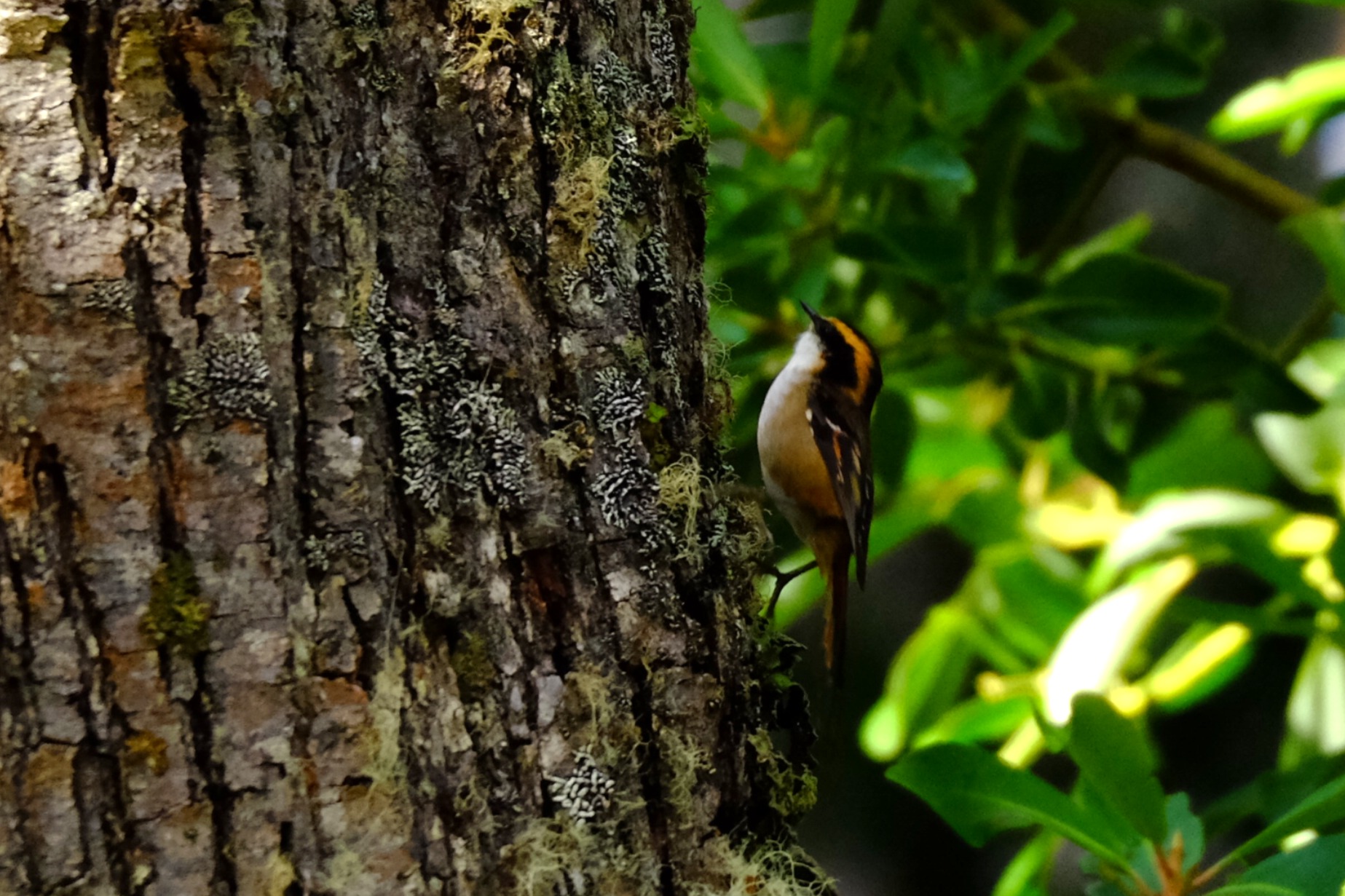
A. spinicauda is a small passerine of about 12 g, with a long, slender tail employed in its acrobatic movements on trunks and branches. Its streaked, brown‑reddish plumage provides excellent camouflage against bark and foliage, and it feeds primarily on insects and larvae, exploring bark and understory vegetation.
A. subantarctica, on the other hand, averages 16 g, with a longer bill, heavier legs, a shorter tail and a behaviour focused close to the ground, reflecting adaptation to a wind‑exposed, herbaceous habitat.
The behaviour of the rayadito in Yagán territory is illustrated by these words from Ursula Calderon: “Tachikatchina is a bird that sings in the mountains during the day, warning that someone is hidden: a wicked man, a sorcerer. It thus announces to the walker the presence of these people, or of a dog, of a cat… in short, of someone hidden. Its calls, when they sing together, are frightening, tsch‑tsch‑tsch, since they do not announce anything good” (p. 70, réf. 10).
Genetics, speciation and conservation
Genetic analyses show a clear differentiation between A. spinicauda and A. subantarctica, which justifies proposing A. subantarctica as a new emblematic species of subantarctic biodiversity. This distinction, combined with morphological and behavioural differences, places the Diego Ramírez archipelago as a natural laboratory of speciation and conservation, now protected by the Diego Ramírez–Drake Passage Marine Park.
For A. spinicauda, the conservation of old‑growth, cavity‑rich forests and the preservation of the Magellanic woodpecker population are essential to maintain the structure of rayadito populations within the Cape Horn Biosphere Reserve.
Sources :
- Rozzi, R. et al. (2022). “The Subantarctic Rayadito (Aphrastura subantarctica), a new bird species on the southernmost islands of the Americas”. Scientific Reports 12, 13957. https://doi.org/10.1038/s41598-022-17985-4
- Rozzi, R. et al. (2023). “The subantarctic rayadito (Aphrastura subantarctica), a new bird species on the southernmost islands of the Americas (repositorio UChile version)”. Repositorio UChile. https://repositorio.uchile.cl/handle/2250/194760
- Ramírez‑D’Crego, R. (2022). “The Subantarctic Rayadito (Aphrastura subantarctica), a new bird species on the southernmost islands of the Americas”. CECS research‑related article. https://ramirodcrego.com/papers/article29/
- Zenodo (2022). Dataset “The Subantarctic Rayadito (Aphrastura subantarctica), a new bird species on the southernmost islands of the Americas”. Morphological and genetic data. https://zenodo.org/records/6983420
- Rozzi, R. et al. (2022). “The Subantarctic Rayadito (Aphrastura subantarctica), a new bird species on the southernmost islands of the Americas”. PMC version (NIH‑NIHMS). https://pmc.ncbi.nlm.nih.gov/articles/PMC9418250/
- Ramírez‑D’Crego, R. et al. (2022). “The Subantarctic Rayadito (Aphrastura subantarctica), a new bird species on the southernmost islands of the Americas – full PDF” (IEB‑Chile). https://ieb-chile.cl/wp-content/uploads/2024/01/s41598-022-17985-4-1.pdf
- Rozzi, R. et al. (2022). Taxonomic description of Aphrastura subantarctica (Wikispecies).
- Marine, R. H. et al. (2022). “The extreme rainfall gradient of the Cape Horn Biosphere Reserve”. Science of the Total Environment ou équivalent (étude de biodiversité et de rayaditos dans les canaux).
- Rozzi, R. et al. (2018). “Marine biodiversity at the end of the world: Cape Horn and Diego Ramírez islands”. PLOS ONE ou revue équivalente, décrivant la diversité des îles Diego Ramírez et la contexte écologique.
- Rozzi, R. et al. (2017). "Guia Multi-Etnica de Aves de los Bosques Subantarticos de Sudamérica". Ediciones Universidad de Magallanes.
Karukinka at the UNESCO Inclusive Toponymy Colloquium in Montpellier
The Southern Cross, celestial companion of our sails in the southern hemisphere

Cape Horn au Long Cours (CHLC): The fascinating historical work of a team of volunteers

Preparing for Kreeh Chinen Festival
A Yagan story: the hummingbird (Omora or Sámakéar)