Peatlands of Tierra del Fuego: peat mosses and liverworts, the silent architects of the austral bogs

Karukinka
27 April 2026
Association Karukinka
Law 1901 - of General Interest
Latest news
Follow us
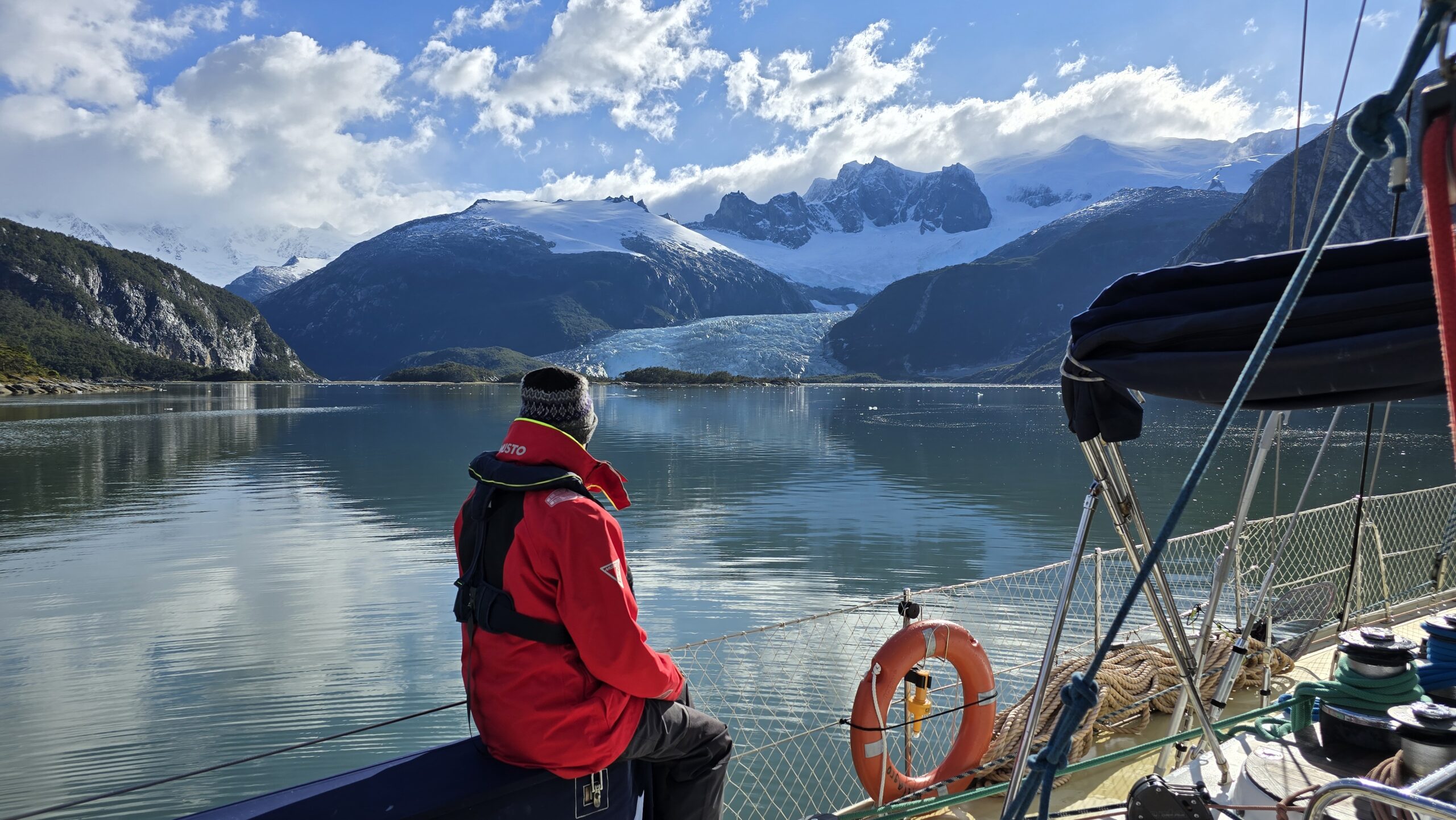
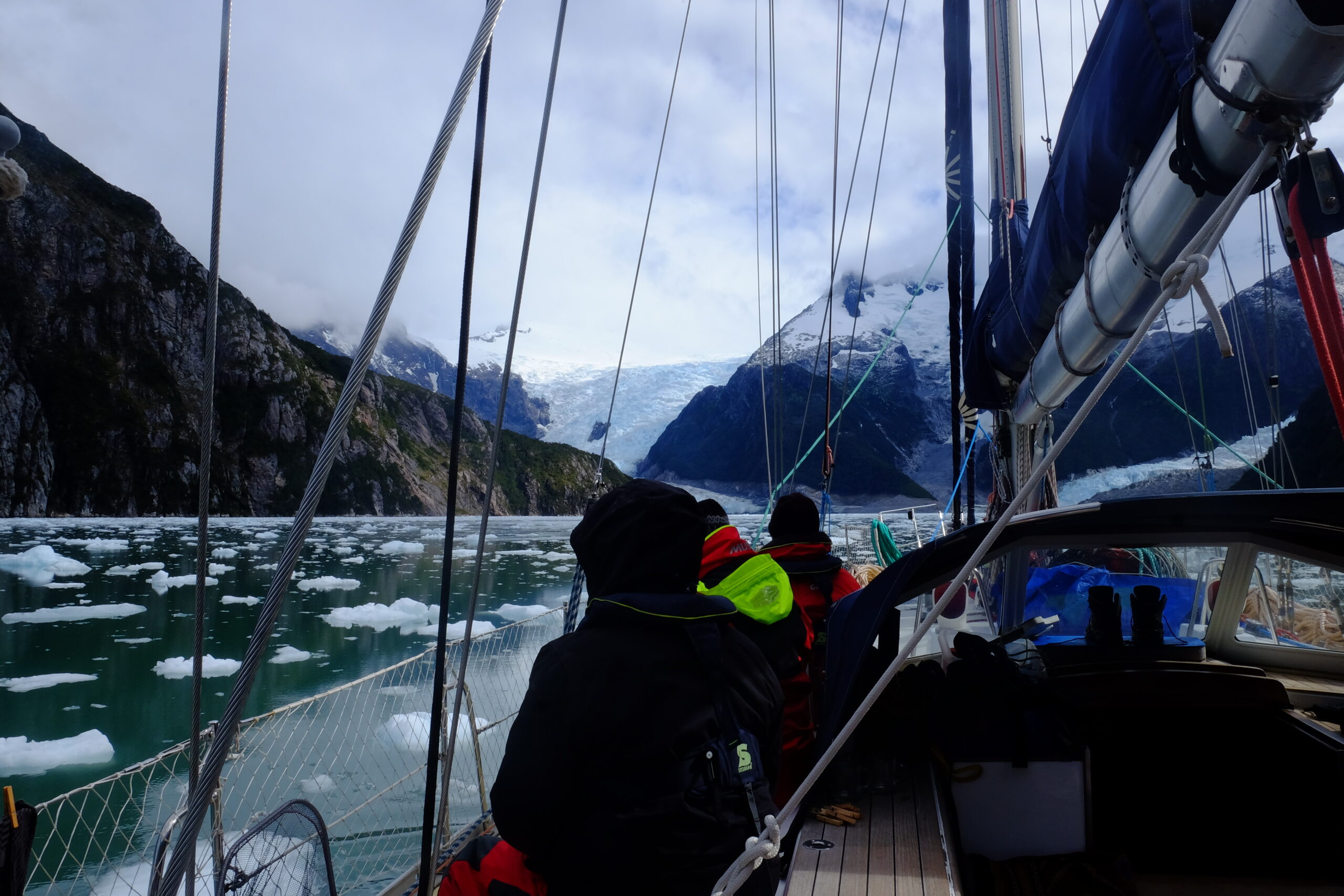
In the peatlands of Tierra del Fuego and the Cape Horn Biosphere Reserve, two groups of non-vascular plants quietly rule over landscapes that might seem hostile to any form of dense life: peat mosses (Sphagnum) and liverworts. Tiny to the naked eye, these bryophytes nevertheless structure one of the carbon-richest and most biodiverse ecosystems in the Southern Hemisphere. Aboard the sailing vessel Milagro, during our expeditions through the southern channels of Tierra del Fuego, we observed them everywhere — on the bark of southern beeches (Nothofagus), on spray-battered shoreline rocks, on the spongy soils of the peat bogs. These are the plants that form the "miniature forests" described by biologist Ricardo Rozzi and the research team at Parque Omora.
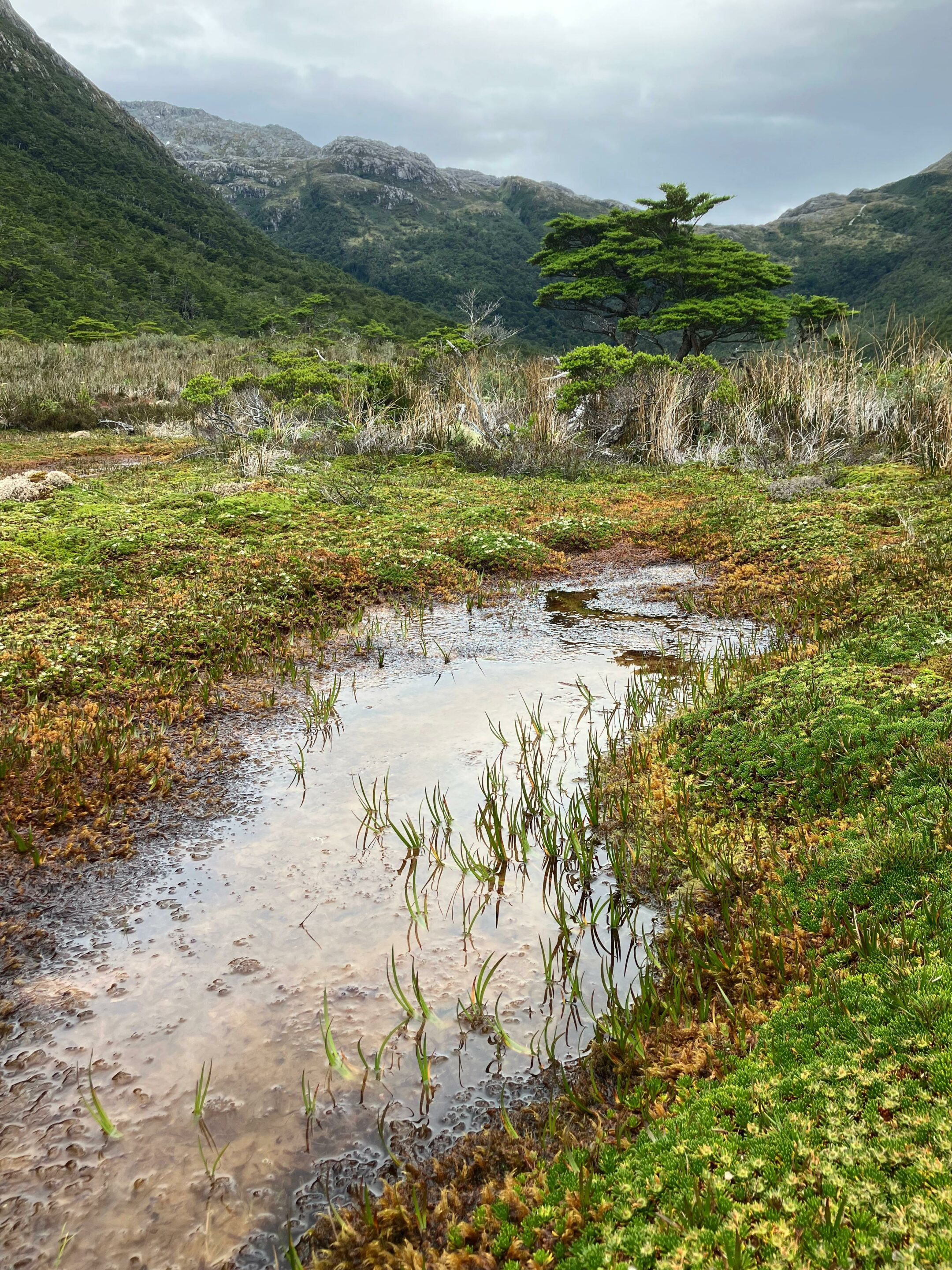
Sphagnum peatlands: sponges of carbon and water
Tierra del Fuego's peatlands formed between 15,000 and 10,000 years BP, in the wake of the last Quaternary glaciation. Today they cover a significant share of the landscape of the Isla Grande (notably the Mitre Peninsula), particularly in the wettest and least disturbed areas south of the Strait of Magellan.
The dominant species is Sphagnum magellanicum Brid., known locally as musgo pompón. This peat moss structures the peatland matrix by saturating soils with water, lowering pH and slowing the decomposition of organic matter — processes that lead to peat accumulation over sometimes considerable depths. The associated ecosystem services are multiple: regulation of hydrological processes, carbon capture and storage, habitat provision, and maintenance of water quality.
Within the peat itself, floristic composition is remarkably homogeneous. The environmental factor that best explains compositional variation between peatlands is water table height rather than species richness — underlining the importance of an intact hydrological regime for the conservation of these ecosystems.
On the Argentine side of the Isla Grande, the glacial valley of Carbajal, north of Ushuaia, flanked by the Sierra Alvear and drained by the Río Olivia, hosts an extensive domed peat plain dotted with lagoons. This site has become a pilot research area for Argentine science on subantarctic peatlands. Studies conducted by CADIC/CONICET and partner institutions use the Carbajal wetland as a case study to quantify carbon stocks, analyse the hydrological regulation role of these peatlands for Ushuaia, and assess the impacts of peat extraction on ecosystem stability.
A global bryophyte hotspot
The Cape Horn Biosphere Reserve is recognised as one of the world's centres of bryophyte diversity. On less than 0.01% of the world's land surface, the region concentrates more than 5% of all known bryophyte species, with a high proportion of endemics. Across the reserve, more than 300 liverwort species and 450 moss species have been recorded.
This richness is a direct product of climatic conditions: the humid temperate forests receive abundant rainfall in a remarkably pure atmosphere, free of air pollutants. The bryophytes and lichens that colonise trunks, rocks and soils are poikilohydric — capable of suspending their metabolism during temporary drought and resuming it rapidly upon rehydration — which makes them particularly resilient to freeze-thaw cycles.
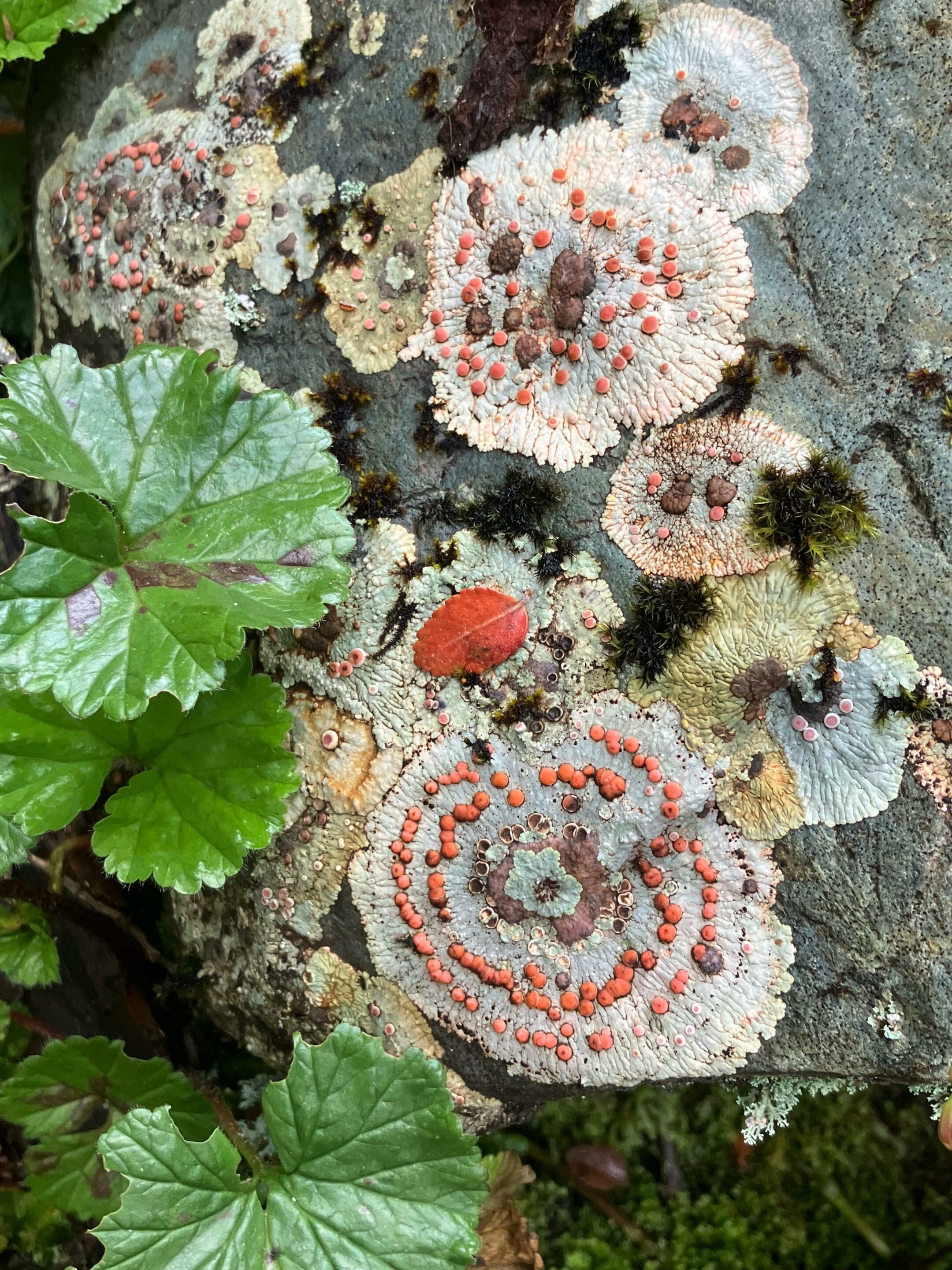
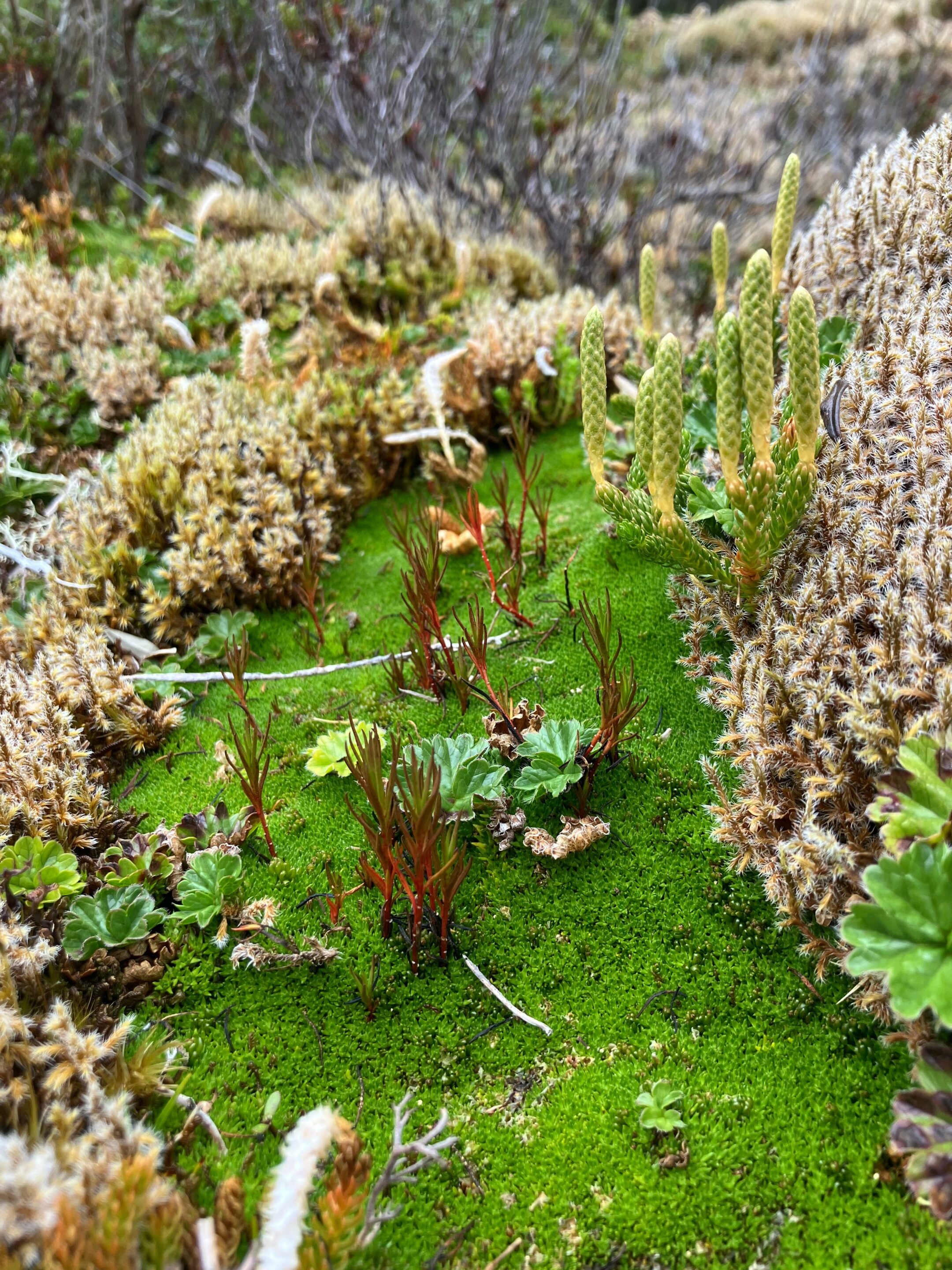
During the Milagro expedition of February 2026, lichens and liverworts were observed and photographed at several sites on Gordon Island. Their identification benefited from the assistance of Ricardo Rozzi and José German Gonzalez Calderon, to whom the team extends its gratitude.
Liverworts: pioneers and indicators
Liverworts (division Marchantiophyta) form a distinct group within bryophytes, separate from mosses and hornworts. In the subantarctic forests of Cape Horn, they preferentially colonise Nothofagus trunks, dead wood and humid woodland edges, forming flat or cushion-shaped mats of a characteristic deep green.
Their sensitivity to atmospheric conditions makes them excellent bioindicators of air quality and ecosystem integrity. The Omora Ethnobotanical Park (Puerto Williams) uses them as educational mediators with local schools, to anchor in children an awareness of the global value of their territory's biodiversity.
Ecological roles in forests and bogs
In humid subantarctic forests, peat mosses and liverworts form thick mantles capable of retaining large quantities of water and regulating local moisture. They act as natural sponges, buffering the impact of frequent rainfall, limiting erosion and stabilising micro-habitats.
In the peatlands, peat mosses structure the saturated matrix that simultaneously stores water and large amounts of carbon — a role of particular strategic importance in the context of climate change. Precipitation in Patagonia is estimated to decrease by 10–20% by the end of the century, which would directly threaten the hydrological integrity of these ecosystems.
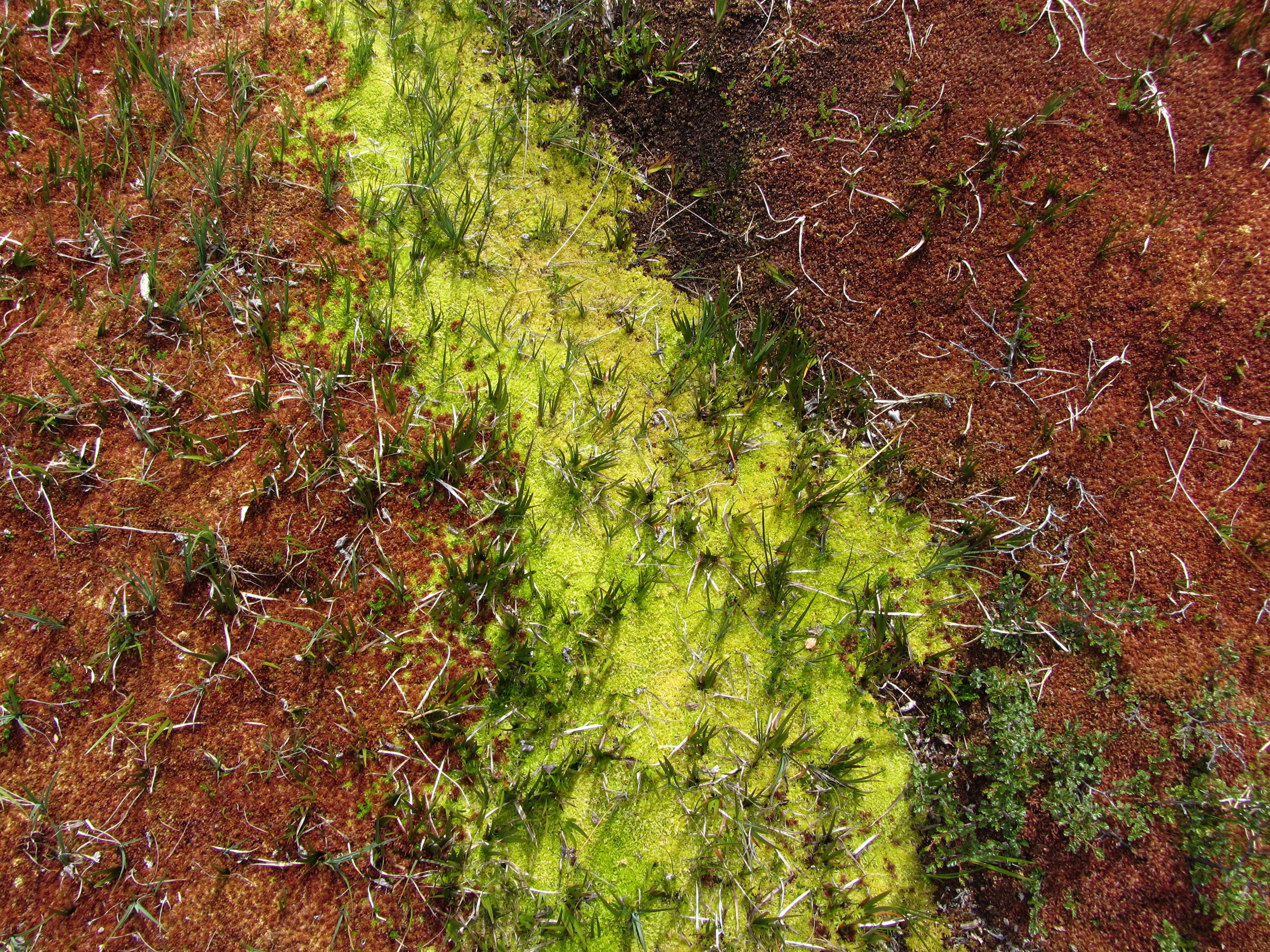
Lichens, frequently associated with bryophytes on the same substrates, play a pioneer role on bare rock and glacial moraines, initiating soil formation that will later allow mosses and then vascular plants to establish themselves.
Threats and conservation
Bryophyte communities remain vulnerable to trampling, hydrological modification and the long-term effects of climate change. Disturbances caused by introduced species — particularly the North American beaver (Castor canadensis), introduced to Tierra del Fuego in the 1940s — profoundly alter watercourses and peatlands, indirectly modifying the substrates and microclimatic conditions that these miniature forests require.
Commercial harvesting of Sphagnum magellanicum for horticulture represents an additional pressure: this activity began around twenty years ago further north, in the Los Lagos and Magallanes regions, and its impact on natural populations is the subject of ongoing sustainable management efforts.
At the southeastern tip of the Isla Grande, the Mitre Peninsula extends this peatland belt toward the Atlantic. This almost uninhabited headland concentrates approximately 84–85% of Argentina's total peatland area: nearly 193,000 hectares of peat bogs out of a provincial total estimated at 270,000 hectares. In December 2022, Provincial Law No. 1461 created the Área Natural Protegida Península Mitre, integrated into Tierra del Fuego's protected-area system. Studies coordinated by CADIC/CONICET and local organisations show that these peatlands rank among Argentina's largest carbon reservoirs: they store the equivalent of several years of national carbon dioxide emissions, and have been recognised by the United Nations Environment Programme as one of the eleven most important peatland ecosystems on Earth.
Ecoturismo con lupa: seeing the world differently
To promote and protect this discreet biodiversity, the Omora Park team developed the concept of Ecoturismo con lupa (hand-lens ecotourism): an approach that places the discovery of mosses, liverworts and lichens at the centre of the visitor experience, within a "field environmental philosophy". Armed with a simple magnifying glass, visitors are guided to observe the bosques en miniatura and understand their ecological role.
This approach, documented in the film Viaje Invisible. Ecoturismo con Lupa (2013), illustrates how millimetre-scale biodiversity can transform a forest walk into a fully-fledged scientific exploration.
Bibliography
- DOMÍNGUEZ, E. et al. Floristic biodiversity present in Sphagnum peatland bogs. Anales del Instituto de la Patagonia, 2021.
- GOFFINET, B., ROZZI, R., MASSARDO, F. et al. Miniature Forests of Cape Horn: Ecotourism with a Hand Lens. University of North Texas Press, 2012.
- ODEPA/INFOR. Musgo Sphagnum: manejo sostenible del recurso. Gobierno de Chile, 2018.
- PIONTELLI, E. Sphagnum magellanicum Brid. en Chile. Boletín Micológico, 2008.
- ROZZI, R. (coord.). Ecoturismo con lupa en el Parque Omora. Universidad de Magallanes.
- SALINAS, J. et al. Generando conocimiento para el desarrollo de cultivos sustentables de Sphagnum. Revista INFOR, 2021.
- VILA, I. et al. Ictiofauna en los sistemas límnicos de la Isla Grande de Tierra del Fuego. Revista Biología Marina, 1999.
- VILLAGRA, J. et al. Sphagnum peatland bog, Magallanes. Anales del Instituto de la Patagonia, 2004.
Preparing for Kreeh Chinen Festival
A Yagan story: the hummingbird (Omora or Sámakéar)
The Sailing yacht Milagro now adorned with coigüe wood
The dialogue between a Machi and ecologists opens new routes to integrate Mapuche knowledge in nature conservation

Conicet studies the Beagle Channel and paves the way for industrial mussel production